top of page

In the world of VST effects, where flashy new releases grab all the attention, some of the most powerful tools are the quiet classics that have stood the test of time. One such under-the-radar legend is mda SubSynth (often called Sub Bass or SubSynth), part of the free mda VST plugin bundle created by Maxim Digital Audio (Paul Kellette) in the early 2000s. This unassuming sub-bass enhancer/synthesizer might look basic, but it's a go-to for pros seeking clean, powerful low-end reinforcement without the bloat of modern alternatives.


What Makes mda SubSynth So Special—and Obscure?

mda SubSynth is a simple yet ingenious effect that takes incoming audio (typically kicks, basslines, or full mixes) and generates ultra-low sub-bass harmonics below the fundamental frequency. With controls for threshold, release, tune, and dry/wet mix, it synthesizes pure sine waves locked to your input signal, adding depth and power that feels natural and musical.

Its obscurity comes from its origins and status:


  • Freeware Classic: Released as part of a bundle of over 30 high-quality plugins (including the famous mda Degrade, Talker vocoder, and dynamics tools), all given away for free with no updates since around 2005.

  • Developer Vanished: Maxim Digital Audio disappeared from the scene years ago; the original site is gone, and the plugins live on through archives on sites like plugins4free or community mirrors.

  • Aging Tech: Mostly 32-bit, requiring bridges like jBridge on modern 64-bit DAWs, and no official support means it's flown under the radar for newer producers.


Despite this, the entire mda bundle has a massive cult following—many consider it some of the best-sounding free effects ever made, often outperforming paid plugins in transparency and character.


How mda SubSynth Elevates Your Mixes and Songs

For producers and musicians, SubSynth is a secret weapon for crafting professional low-end that translates everywhere—from club systems to phone speakers. Here's why it helps create better mixes and songs:


  1. Powerful Sub-Bass Reinforcement: Apply it to kicks or bass guitars to add sub-octave sine waves that fill out the bottom end without mud. It tracks pitch perfectly, giving punchy, tight lows that modern octave plugins often struggle to match cleanly.

  2. Mix Glue and Translation: On drum buses or master channels, subtle use enhances perceived loudness and warmth. Your tracks will hit harder on big systems while staying balanced on smaller ones—essential for genres like hip-hop, EDM, dubstep, or electronic music.

  3. Creative Low-End Design: Tune it for specific notes to create rumbling subs under synths or pads. In songs, it adds weight to builds and drops, making transitions more impactful and helping elements like 808s cut through without EQ battles.

  4. Clean and CPU-Friendly: Unlike resource-heavy modern tools, SubSynth is lightweight and artifact-free. Parallel it on sends for controlled enhancement, or use it to fix thin recordings—resulting in mixes that feel fuller, more professional, and sonically cohesive.


In an era of overprocessed plugins, mda SubSynth reminds us that simplicity can deliver massive results. It's been used on countless records (quietly, in pro studios) to achieve that elusive "pro" low-end. If you're tired of boomy, phasey subs, this obscure gem will level up your productions instantly.


Hunt it down in the mda bundle archives (scan for safety)—pair it with other mda classics like the limiter or reverb for a vintage-free toolkit that still rivals today's best.

If you enjoyed discovering mda SubSynth, check out another fascinating plugin here: Goodhertz Lossy: The Strangest MP3 Artifact Plugin for Experimental Music Production. It explores digital artifacts for even more unique sonic textures!


In the crowded world of audio plugins, where sophisticated wavetable synths and hyper-realistic emulations reign supreme, there exists a shadowy corner reserved for the truly eccentric—plugins that prioritize whimsy, absurdity, and sheer fun over conventional utility. One of the most delightfully obscure entries in this niche is MeowSynth, a free VST instrument developed by the enigmatic Russian developer Knobster (from knobster.org) in the mid-2000s.

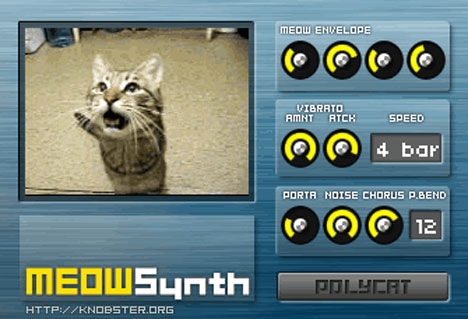
This isn't your standard synthesizer; it's a dedicated "meowizer" that transforms MIDI input into an array of cat sounds—meows, purrs, hisses, and everything in between—complete with controllable parameters for crafting surprisingly musical feline vocals.


meowsynth vst audio fx plugin

Diving into MeowSynth: What It Is and Why It's So Rare

MeowSynth is a monophonic (or polyphonic in some modes) sample-based synthesizer built around high-quality cat vocal samples. Its interface is simple yet effective:


  • Oscillator: Based entirely on cat meows as the core waveform.

  • Autofilter: Velocity-sensitive filtering to shape the tone from soft purrs to aggressive yowls.

  • Vibrato: Tempo-synced with adjustable attack for adding expressive wobbles.

  • Chorus: Built-in for thickening the "meow" into choral cat ensembles.

  • Visual Feedback: A basic but charming display that reacts to your playing.


What sets it apart is its unapologetic focus: no presets for pads or leads—just cats. Play a melody on your MIDI keyboard, and you'll hear layered, pitch-tracked meows that follow your notes with eerie accuracy.

Its rarity and obscurity stem from several factors:


  • Developer Disappearance: Knobster released a handful of quirky plugins (like KeyWriter typewriter synth, BeatVox vocal beats, and MelloFAN fan noise generator) before vanishing from the scene around the late 2000s/early 2010s. The original website is long gone, preserved only through archives and community backups on sites like Neocities or old torrents.

  • Abandonware Status: No updates in nearly two decades, making it 32-bit only and requiring bridges (like jBridge) for modern 64-bit DAWs. It's Windows-exclusive VST, with no Mac or modern format support.

  • Niche Cult Appeal: Shared in obscure forums, "weird VST" collections, and packs like the "World's Strangest Plug-in Mega-Vault." It's not marketed or discussed in mainstream production circles—most producers stumble upon it while hunting for sonic novelties alongside gems like Delay Lama.

  • Limited Availability: Downloads are scattered across freeware archives, often bundled in Knobster's full collection. Always scan for viruses when sourcing from unofficial mirrors!


This obscurity means MeowSynth has evaded the spotlight, remaining a hidden treasure for those who appreciate experimental sound design.


Why MeowSynth Deserves a Spot in Your Toolkit—and How It Improves Your Productions

At first glance, a cat meow synthesizer sounds like pure novelty—something to giggle at during a late-night session. But dig deeper, and MeowSynth reveals itself as a remarkably versatile tool for injecting personality, humor, and unique textures into your music. Here's how it can genuinely elevate your mixes and songs as a producer or musician:


  1. Expressive Vocal Textures: The velocity-sensitive filter and vibrato allow for nuanced performances. Short, staccato notes produce sharp "mews," while sustained ones yield drawn-out yowls or purrs. Layer it subtly under human vocals for eerie, animalistic harmonies in ambient, electronic, or cinematic tracks—think adding a mystical, primal edge to soundscapes.

  2. Percussive and Rhythmic Elements: Trigger rapid sequences for glitchy, cat-like rhythms. Combine with the chorus for "swarms" of meows that function as quirky hi-hats or shakers. In genres like IDM, glitch-hop, or experimental pop, it creates unpredictable percussion that no standard drum machine can replicate, adding organic chaos to rigid beats.

  3. Atmospheric and Sound Design Magic: Use low-velocity, filtered purrs as evolving pads or drones. Modulate vibrato for wavering tension in horror scores, psytrance builds, or lo-fi chill tracks. It's excellent for foley-like effects in game audio or film—imagine a haunted house with distant cat cries echoing through halls.

  4. Humor and Memorable Hooks: In pop, hip-hop, or viral tracks, a well-placed meow melody can become an iconic earworm (think internet cat video vibes turned professional). Subtle use adds whimsy without overpowering; go bold for comedic skits, memes, or avant-garde pieces. It sparks creativity—randomly playing with it often leads to unexpected melodies that inspire entire songs.

  5. Mix Enhancement and Glue: In dense arrangements, MeowSynth's organic timbre cuts through with its high-frequency content and formant-like qualities. Parallel process it on aux sends for controlled "cat reverb" tails, or blend purrs into basslines for subtle warmth. It helps elements feel alive and distinctive, preventing mixes from sounding generic or overly digital.

  6. Inspiration and Workflow Boost: The sheer absurdity breaks creative blocks. Fire it up during writer's block, noodle around, and watch ideas flow—its playful nature encourages experimentation, leading to happier, more innovative sessions.


Pros like those in experimental electronica or viral sound design have quietly used similar oddities for years, proving that weird tools often yield the most original results. MeowSynth isn't about perfection; it's about character. In a mix, it adds that indefinable "something" that makes listeners perk up and ask, "What was that sound?"


If you're tired of polished, predictable plugins and crave something truly unique, track down MeowSynth in archived Knobster bundles. Pair it with other Knobster oddities like Organaut (organ + astronaut themes) or Slitch (glitchy slicer) for a full toolkit of sonic weirdness. It's a testament to the early freeware era—raw, fun, and unpretentious.


In the end, great production thrives on surprises. MeowSynth delivers them in spades, helping you craft mixes and songs that stand out with personality, depth, and a touch of feline mischief.

If you loved this peek into MeowSynth's quirky world, check out another fascinating plugin here: Goodhertz Lossy: The Strangest MP3 Artifact Plugin for Experimental Music Production. It takes digital glitches to creative new heights!

Some plugins try to sound expensive. Mishby sounds like the machine has developed a personal problem.

Freakshow Industries Mishby sits in that strange corner of audio tools where the interface, the attitude, and the sound all tell you not to behave. It is a tape-damage effect in the broad sense, but calling it a tape plugin makes it sound more sensible than it is. Mishby is about wobble, dirt, warping, collapse, unstable tone, and the feeling that the signal path is being punished for doing its job.


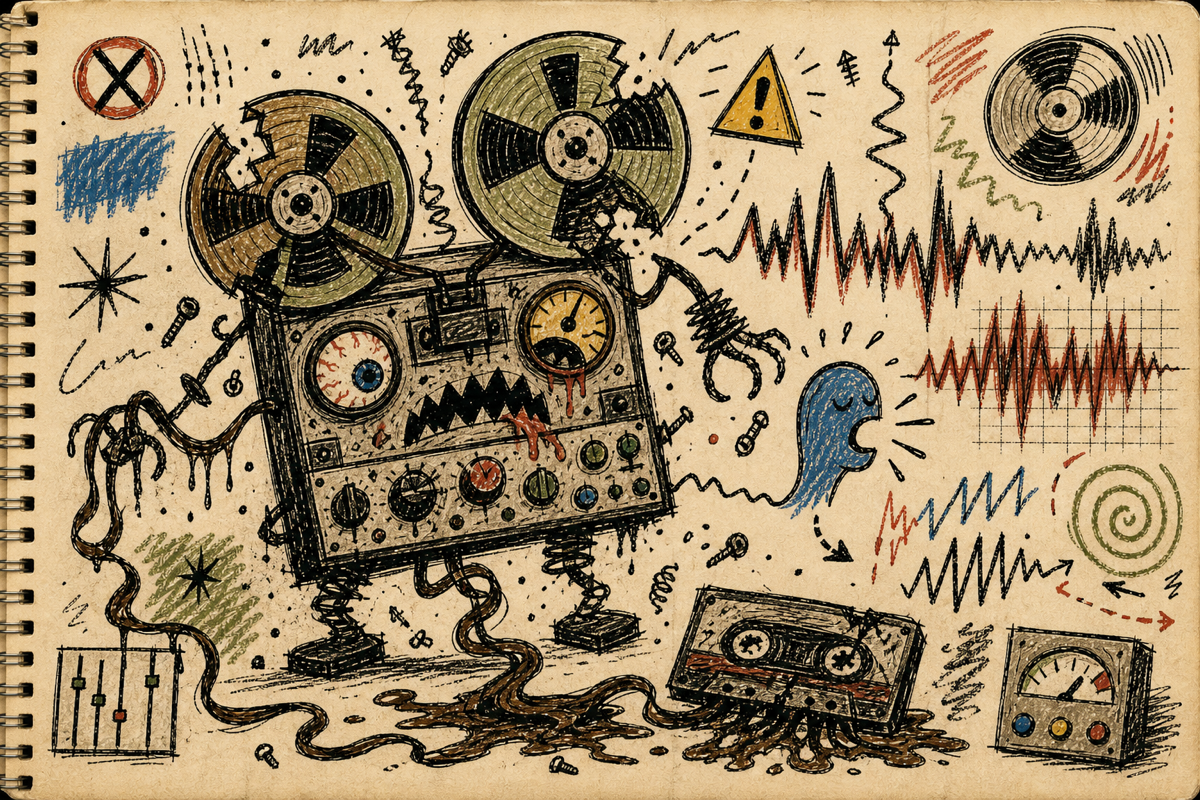
Crude notebook drawing of a sick tape machine with crooked reels, wobbling waveforms, loose screws, warning marks, and a small vocal shape escaping the damage

That can be exactly what a track needs. It can also ruin the thing that made the track good.

Mishby is strongest when the broken machine has a role. A keyboard becomes seasick for one verse. A vocal throw falls apart after the last word. A drum loop becomes a haunted piece of machinery under the chorus. A clean guitar loses its polite edges and starts sounding like it came through a half-broken cassette deck in a basement.

It is weakest when every part of the track gets dragged into the same theatrical collapse.


Why Mishby Is Cool

Mishby has cult appeal because it does not feel like a neutral studio utility. It has a point of view. The whole thing feels designed to make degradation feel physical, suspicious, and funny in a slightly uncomfortable way.

That matters because a lot of lo-fi plugins are too tasteful. They add a little hiss, a little wobble, a little dullness, and suddenly the track has the costume of age. Mishby feels less like nostalgia and more like a machine misbehaving in front of you. It can make a sound unstable enough that the listener notices the record is being bent.

This is useful when the music needs consequence. A clean synth pad can become too smooth to carry tension. A loop can feel pasted into the production. A vocal effect can sound like another stock delay or reverb throw. Mishby can push those parts into a more specific world.

The cool part is not just that it sounds broken. Broken is easy. The cool part is that it can make a part feel less trustworthy. That can be emotionally useful in indie rock, experimental pop, noise-adjacent productions, post-punk, left-field electronic music, and any arrangement where the polished version feels too obedient.


Where It Helps In A Track

Mishby works best on parts that are allowed to stop being clean sources.

A backing vocal is an obvious place. The lead vocal might need to stay present and human, but a phrase at the end of a line can be sent into Mishby and returned as a warped memory. That kind of move can give a track character without making the main performance hard to understand.

It can work on keys and synths when the part is too straight. A soft pad might be pretty but emotionally blank. A small amount of tape abuse can make it feel like it is sagging under the song. A simple chord part can start to move around the grid instead of sitting perfectly on top of it.

Drum loops are another good target. A loop that sounds too clean can become a low, damaged layer under real drums or programmed percussion. The trick is usually not to replace the groove. Let the clean drums do the timing. Let Mishby add the unstable underside.

Guitars can take it when the production wants a cheap, broken, off-axis feeling. Not every guitar should sound like a destroyed tape machine. But one printed layer, tucked under the real guitar, can make the track feel stranger without losing the amp or hand.

The plugin belongs close to the same family of creative damage as Tapetown's live post on Freakshow Industries Backmask. Backmask points toward reversal and unnatural motion. Mishby points more toward unstable tape-machine sickness. Both are useful when they create an event, not when they become wallpaper.


Where It Becomes A Gimmick

The bad Mishby move is easy: put it on something, laugh because the sound is ruined, and decide the track is now more interesting.

That works for about ten seconds. Then the song asks a harder question. Did the effect make the part mean more? Did it create contrast? Did it make the transition better? Did it reveal something in the vocal, rhythm, or arrangement? Or did it only announce that a weird plugin was used?

Weirdness is not depth. A plugin can be strange and still lazy.

The danger with Mishby is that it has such a strong personality. If too many parts go through it, the whole production can collapse into one shared texture. The vocal is unstable. The drums are unstable. The keys are unstable. The guitar is unstable. Nothing is stable enough for the broken parts to lean against.

The result can sound cool in a clip and tiring in a song. The listener needs an anchor. That anchor might be the dry lead vocal, the kick and bass, a clean guitar, a steady snare, or just a section where the effect disappears. Without contrast, damage has no scale.

This is close to the bigger Tapetown point in The Art of the Raw Edge. Roughness is useful when it belongs to the record. It becomes fake when it is painted over everything.


Printing The Damage

Mishby is the kind of plugin that often gets better when it is printed to audio.

That is not because printing is romantic. It is because the damage becomes something you can edit like a performance. Once the warped part is audio, you can cut it before the next vocal line. You can mute one ugly wobble and keep another. You can let the machine collapse only on the last repeat. You can reverse one fragment, distort the printed tail, or remove the original dry sound entirely.

The effect becomes less like a plugin setting and more like an arrangement object.

This is important with unstable effects. A live plugin return can keep changing in ways that feel exciting while you are working, but vague in the final record. Printing forces the question: which moment matters? Which piece of the damage should the listener actually hear?

It also helps the rest of the mix react. If the damaged keyboard is now a printed part, maybe the clean guitar can be drier. If the vocal throw is warped enough, maybe the reverb can be simpler. If the drum loop has Mishby movement, maybe the percussion should stop pretending to be clever.

That is where weird plugins become useful. They create consequences other parts have to answer.


The Clean Anchor

Mishby needs something near it that is not Mishby.

That sounds obvious, but it is the difference between character and fog. If a vocal throw is broken, the main vocal should probably stay readable. If a drum loop is melting, the kick or snare may need to stay more direct. If a synth pad is wobbling, another instrument may need to hold the chord shape without drama.

The clean anchor does not have to be boring. It just has to give the damage a frame.

This is why the plugin can work well in band music. A band recording already has human timing, bleed, rooms, amps, voices, and physical sources. One broken layer can sit inside that world and make it feel stranger. But if the whole band is forced through the same cartoon of decay, the performance may lose its body.

For Tapetown, the useful question is not whether the plugin is extreme. It is whether the extreme thing gives the record more identity. A strange effect should make the song feel more like itself, not less.


Mishby Versus Normal Tape Color

Mishby is not the same as adding a little tape warmth.

There are plenty of tools for subtle saturation, gentle wobble, soft top end, and tasteful cassette texture. Those can be useful, especially when a production feels too clean. Mishby lives in a more theatrical place. It is not only aging the sound. It is making the sound feel unstable enough to become a character.

That makes it less flexible and more memorable.

If the track needs a little softening, Mishby may be too much. If the track needs a part to become wrong in a way the listener remembers, it might be exactly right. That difference matters. Not every song needs the weirdest tool. Some songs need the boring move done well.

The tape-damage family can also connect to Tapetown's live-to-tape philosophy, but only if the idea is understood properly. Real tape commitment is not the same as fake tape damage. The shared lesson is decision-making. A sound changes, and the rest of the record has to live with that change.

Mishby is useful when that change is worth living with.


Where It Belongs In The Arrangement

The best Mishby moments usually happen at the edge of the arrangement, not across the whole middle of it.

Think of the places where a record can afford to become unstable: the last word before a chorus, the two beats before a drop, the background keyboard that nobody should hear as a keyboard, the noise after a guitar stops, the sample that enters for one section and never comes back. Those are good places for a broken machine because the listener has enough context to feel the interruption.

It can also work when the song needs a small ugliness to stop the production from becoming too tasteful. A pretty verse can take one warped texture behind the vocal. A tight chorus can take a damaged transition right before it opens. A clean bridge can briefly sound like the tape is folding in on itself, then return to the band with more force.

The point is to make the damage behave like a scene change. If the track is already messy, Mishby may not help. If the track is too clean, one unstable layer can give the clean parts more meaning.


The Tapetown Read

Mishby is a good weird plugin because it does not pretend to be invisible. It wants to mark the sound. It wants the listener to feel the machine bending.

That can be powerful. It can make a clean production less polite, turn a transition into an event, give a vocal throw a diseased little life, or make a loop feel like it came from somewhere less tidy than a sample folder.

But the tool is not the taste. The taste is deciding what gets damaged, how long the damage lasts, and what stays clean enough to make the damage readable.

Used well, Mishby gives one part a problem the song can use. Used badly, it makes the whole record perform weirdness without knowing why.

For artists thinking about mixing as a record-making decision, that is the useful lesson. A strange plugin is not a shortcut to personality. It is a way to create a problem that only becomes musical if the mix knows what to do with it.

bottom of page