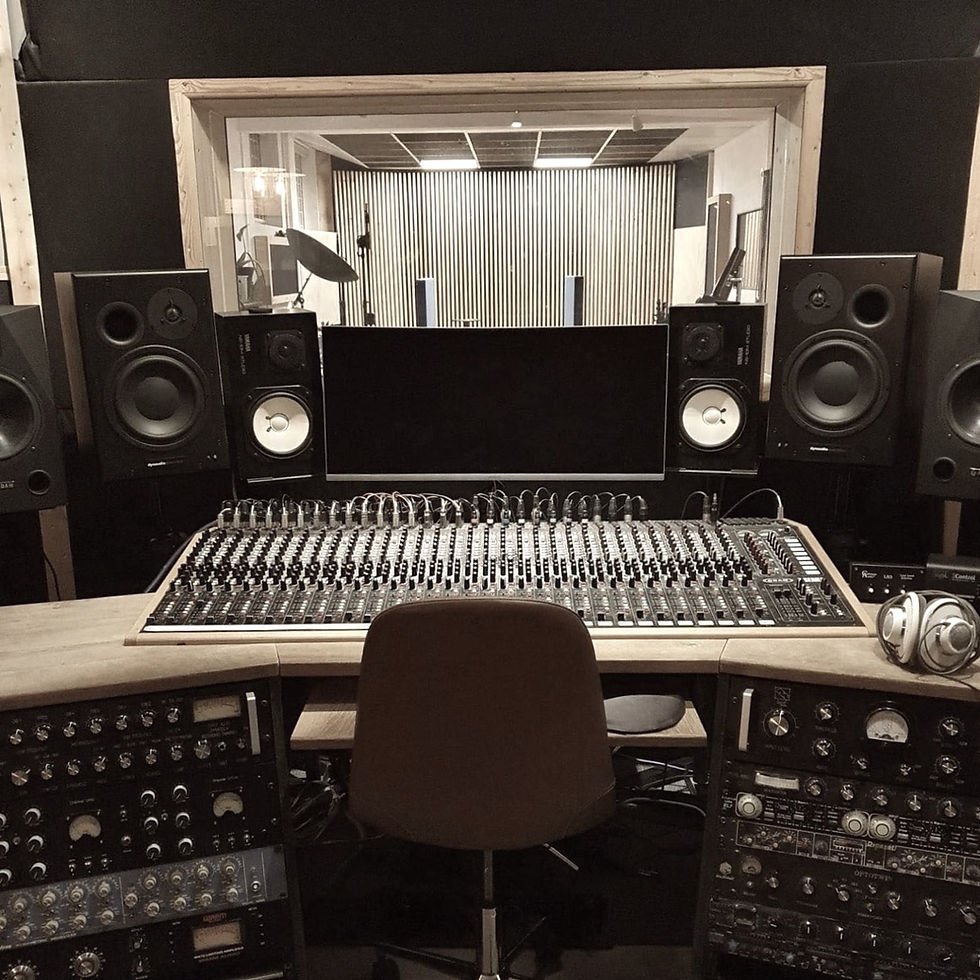
Who Should Mix Your Live Recording?

The person who should mix your live recording is someone who has mixed live recordings in your genre before, can play you full live mixes rather than highlights, and talks about keeping the room and the bleed instead of removing them. A live mix is a different job from a studio mix. Every microphone hears every instrument, the singer can't be fixed without moving the drums, and the crowd is part of the song. The guide below is for bands and artists with a concert recording, a festival set or a filmed session on a hard drive, who need to pick a mixer and want to know what to ask before they send the files.
Why a live recording needs a different kind of mixer
In a studio record, each instrument lives on its own track and a mixer can shape each one on its own. A live recording doesn't work like that. The snare is in the vocal mic. The bass amp is in the drum overheads. The PA is in everything. Every decision on one channel moves the others.
A mixer who mostly works on studio records will reach for the studio toolkit: gates on every drum, tuning on the vocal, samples under the kick, a limiter that brings the quiet song up to the level of the loud one. On a live recording those moves leave fingerprints. Gates make the room pump. Tuning drags the cymbals along with the voice. Samples turn a sweaty set into a tidy one that nobody believes.
A good live mixer works the other way round. The take already happened. The job is to make it hold up on earbuds and on a big system without changing what it was. We wrote about how that works in practice in how we mix a single take.
Seven things to look for in a live mixing engineer
1. Full live mixes in your genre
Ask for whole songs, not a showreel. A thirty-second clip can hide anything. A full live mix tells you how the mixer handles the quiet verse, the moment the drummer leans in, the applause and the count-in to the next song. If you play post-punk, listen to post-punk. If you play folk, listen to folk. A great live jazz mixer may still mix your noise band like a jazz trio.
2. Credits you can check
Look for credits that sit somewhere other than the mixer's own website: video descriptions on the band's or a broadcaster's channel, Discogs, liner notes, a festival's own page. On filmed sessions the credits are usually in the video description, and that is where you can see who recorded it, who mixed it and who mastered it.
3. They ask what the night felt like
The first questions should be about the performance, not the file format. Which song was the best one? What happened in the room? What would you hate to lose? A mixer who opens with "send me stems and a reference" is treating your show like a studio session.
4. They want the room and audience mics
Ambience and audience microphones are the closest thing to what people heard in the room. A live mixer who knows the job will ask for them, even if they sound terrible on their own, and will build the mix around them. Our guide to room and ambient mics explains why they matter so much.
5. Honest about what can't be fixed
A dead channel can't be brought back. A vocal buried under PA spill can be helped, not rebuilt. A good mixer listens first and tells you which problems are real before you pay for anything. Be wary of anyone who promises your concert will sound like a studio record. It won't, and it shouldn't.
6. They can mix to picture
Most live recordings now come with video. If yours does, the mix has to sync to the edit, survive YouTube's loudness normalization and sound right on a phone speaker, which is where most people will hear it first. Ask whether the mixer has delivered audio for filmed sessions before.
7. They know where the recording came from
Concert multitracks come off digital desks, SD cards, laptops and stage boxes, often at 48 kHz, sometimes with the desk's own EQ and compression printed on every channel. A mixer who has handled venue recordings will know what to ask for and what to check before starting.
Red flags when hiring someone to mix a live recording
They offer drum sample replacement as a standard step.
They want to tune the lead vocal by default.
They ask for heavily processed stems and no room mics.
They promise a specific loudness before hearing the recording.
Every example they send is a studio record.
They can't tell you who recorded, mixed and mastered the work they show you.
None of these makes someone a bad engineer. They make them the wrong engineer for a live record.
Questions to ask before you send the files
Have you mixed a concert or a filmed session in my genre? Can I hear a full song?
Do you mix from the raw multitrack or from processed stems?
What do you need from the venue or the person who recorded it?
Will you work with the audience and room mics?
How do you handle edits between songs, tuning breaks and false starts?
Can you deliver for video as well as for streaming and vinyl?
How many rounds of notes are included?
Who masters it, and do you talk to them?
The answers matter less than how the mixer talks about your recording. You want someone who sounds curious about your show, not someone reading a price list.
Should the person who recorded it also mix it?
Often yes, and often it doesn't matter. The engineer who recorded the show knows where the problems are, which helps. But plenty of good live mixes are made by someone who wasn't there. Of the 75 sessions on our session credits list, 14 were recorded by other engineers and mixed by us, from a set in the Great Hall at Musikhuset Aarhus recorded by William Smith to a deathcrash show at Vera in Groningen recorded by the live sound engineers on the night. What matters is that the files are complete and the mixer asks the right questions.
How much does it cost to mix a live recording?
It depends on the number of songs, the number of channels, whether there is video to sync to and how much repair the recording needs. A clean multitrack of a short session is a different job from a two-hour concert with a dead bass channel and no audience mics. Most mixers quote after hearing the recording, and we work the same way. Send a rough board mix or even a phone recording of the set, and ask for a quote before anything else.
What our credits look like, as one example
We record and mix bands playing live at Tapetown, so this is the part where we talk about ourselves, briefly. Rasmus Bredvig recorded KEXP's four sessions at SPOT Festival in Aarhus in 2022 with Jonna Aspeklev and mixed all four: Rigmor, Brimheim, Jeuru and JJ Paulo. The credits are in the video descriptions on KEXP's own channel. Since 2017 we have mixed filmed sessions with Iceage, The Murder Capital, Mikal Cronin, Bambara, Moaning and Ulrika Spacek, among many others, in concert halls, clubs, two bowling alleys, a brewery and a glass museum. Every session is played live with no overdubs. The full list, with who recorded and who mixed each one, is on our session credits page.
Hold us to the same standard as anyone else. Ask for full songs. Ask who did what.
Our take: hire the person who listens to the room
The best live mixes we know don't sound mixed. They sound like you were standing in the room, a little closer to the singer than you actually were. That comes from a mixer who starts with the room, decides what the performance was about and protects it. Everything else is technique, and technique can be learned. A feel for live rooms comes from mixing a lot of them.
If you recorded your band live in a studio rather than at a show, you recorded your band live, here is how mixing changes covers the studio side, and how to choose a mixing engineer for alternative music covers the general hire.
Live recording mixing FAQ
Who should mix a live album?
Someone who has mixed live recordings in your genre and can play you full live mixes, not clips. They should ask for the room and audience mics and be honest about what can't be fixed.
Can a studio mixing engineer mix a live recording?
Some can, but the studio toolkit of gates, tuning and samples tends to leave fingerprints on a live take. Ask to hear a full live mix before you hire them.
Should the engineer who recorded the show mix it too?
It helps, but it isn't necessary. Many good live mixes are made by someone who wasn't there, as long as they get the full multitrack and ask what the night was like.
What should I ask a mixer before sending a live recording?
Ask to hear a full live mix in your genre, whether they work from the raw multitrack, how they handle audience mics and edits, whether they can deliver for video, and who masters it.
How much does it cost to mix a live recording?
It depends on song count, channel count, video sync and repair work. Most mixers quote after hearing a rough board mix of the set.
Keep reading
Ready for a live mix that still sounds like the night? Send us a rough board mix or a phone recording of the set, tell us which song is the one, and we'll tell you honestly what the multitrack needs. Send it here.