


How to Make Your Music Sound Human in the Era of AI
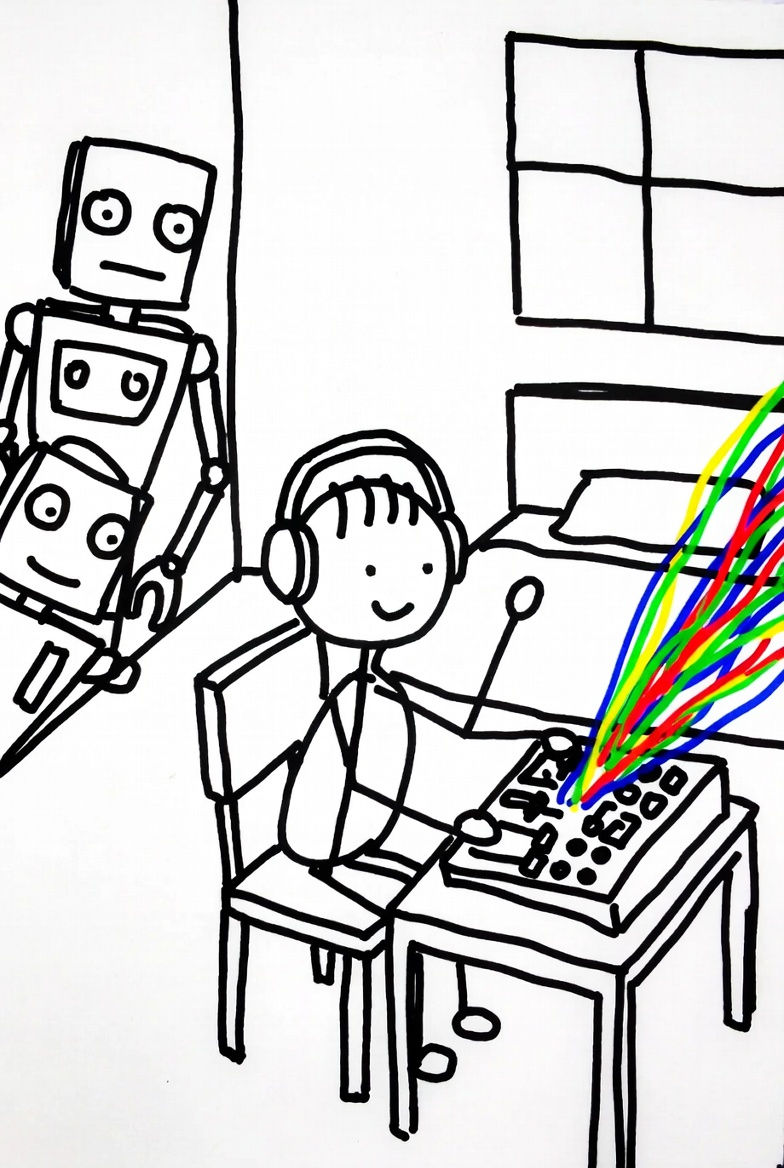
AI can now make music sound finished very quickly. Tools like Suno can create complete songs with vocals, lyrics, and production from a text prompt. Streaming platforms are also seeing a major rise in synthetic music. Deezer has reported that fully AI-generated tracks now make up a large share of its daily uploads.
That does not mean human music is becoming less important.
It means the opposite.
When polished music becomes easier to make, the value moves away from simple polish and toward identity. The question is no longer just: does this sound professional?
The better question is:
Does this sound like a real artist with a real point of view?
That is where human music still wins.
The quick answer
To make your music sound human in the era of AI, focus on the things that cannot be easily generated: real performances, emotional vocals, imperfect timing, dynamic contrast, physical rooms, personal lyrics, unusual sounds, and mix decisions that protect character instead of removing it.
A human-sounding track does not have to be messy. It does not have to be lo-fi. It does not have to reject technology.
It just needs to feel like someone meant it.
Why human music matters more now
For years, independent artists were trying to sound more professional.
Better microphones. Better plugins. Better drum samples. Better mastering. Better distribution. Better home studios.
That still matters. But AI changes the problem.
If more and more tracks can be generated, cleaned, mastered, and released quickly, then sounding “finished” is not enough. A finished track can still be forgettable. A clean track can still feel empty. A perfect track can still say nothing.
The future will be full of music that sounds technically acceptable.
So real artists need to make music that feels specific.
Specific to a voice.Specific to a band.Specific to a room.Specific to a scene.Specific to a moment.Specific to a set of decisions that could not belong to anyone else.
That is the human advantage.
Human does not mean bad
There is a mistake people sometimes make when talking about human-sounding music.
They think human means sloppy.
It does not.
Human does not mean out of tune, badly recorded, weakly played, or unfinished. Human music can be clean, loud, modern, edited, layered, and carefully produced.
The difference is intention.
A human-sounding record still has emotional evidence inside it. You can feel the performance. You can feel the decisions. You can feel that the song was shaped by taste, not just by default settings.
This is especially important for indie and alternative music, where character often matters more than perfection. Tapetown’s own mixing service is built around this idea: mixing and mastering for alternative music, with a hybrid approach that can give recordings more weight, depth, and physical texture.
1. Start with the emotional center
Before you think about mixing, mastering, plugins, AI, analogue gear, or production tricks, ask this:
What is the emotional center of the song?
Is it anger?Sadness?Nostalgia?Tension?Humour?Anxiety?Romance?Pressure?Release?A feeling you cannot quite name?
The mix should be built around that center.
If the song is supposed to feel intimate, the vocal may need to be close and exposed. If the song is supposed to feel like a nervous breakdown, maybe the drums should not be too tidy. If the song is supposed to feel like a band exploding in a room, maybe the room sound should be part of the record.
A lot of music becomes less human when production decisions are made in isolation.
The vocal is made clearer because clarity is “good.”The drums are made tighter because tightness is “good.”The guitars are cleaned up because cleanliness is “good.”The master is made louder because loudness is “good.”
But good for what?
A human record starts with purpose.
2. Record performances, not just parts
Modern production makes it easy to build songs piece by piece.
Record one part. Edit it. Record the next part. Edit it. Tune the vocal. Quantize the drums. Replace the kick. Clean the guitar. Stack everything together.
That can work. But it can also remove the feeling of people reacting to each other.
Human music often comes from interaction.
A drummer pushes the chorus because the singer gets louder.The bass player leaves space because the guitar part becomes busy.The vocalist phrases differently because the band is playing softer.The tempo breathes slightly because the song needs it.
These things are hard to fake because they are not just sounds. They are relationships.
This is why live recording still matters. In Tapetown’s article Recording a Band Live in a Room: What Actually Happens, the point is not just that musicians play at the same time. The point is that the band responds to itself in real time, with bleed, movement, risk, and commitment.
Even if you are not recording fully live, think like a live band.
Let the parts talk to each other.
3. Keep the details that prove it is real
AI and modern editing tools are very good at smoothing things out.
Timing gets corrected.Pitch gets corrected. Noise gets removed. Drums get replaced.Breaths get cut. Guitar squeaks disappear. Room sound gets cleaned. The performance becomes safer.
Sometimes that is exactly what the song needs.
But not always.
A slightly rushed chorus can create excitement. A vocal crack can make a lyric believable. A noisy guitar can give a song teeth. A drum room can make the track feel like it happened in a real place. The question is not: is this technically perfect? The question is: Does this detail make the song more convincing? If the answer is yes, be careful before you remove it.
4. Use imperfection as a creative tool
Imperfection is not automatically good. A bad take is still a bad take. A weak sound is still a weak sound.
But useful imperfection can give music identity.
A snare that rings strangely.A guitar amp that sounds a little broken.A bass tone with too much dirt.A vocal double that is not perfectly tight.A room mic that makes the drums feel dangerous.A tempo that moves slightly between sections.
These things can become part of the song’s personality.
This is one reason so many older DIY, punk, indie, and alternative records still feel alive. They were not always technically perfect, but they had a strong sense of attitude and necessity. Tapetown’s article Recording the DIY Punk Scene is a good example of this mindset: limited tools, direct energy, and recordings that captured a feeling rather than chasing perfection.
In the era of AI, that kind of personality becomes more valuable.
5. Let the room become part of the sound
A lot of digital music feels like it happens nowhere.
Everything is close. Everything is controlled. Everything is placed in an artificial space after the fact.
That can be useful. But a real room gives music a different kind of depth. It tells the ear that something happened somewhere.
Room sound does not only mean reverb. It means air, distance, pressure, reflections, movement, and the way musicians respond when they hear themselves in a physical space.
Tapetown’s article The Room as an Instrument goes deep into this idea: a room is not just a container for sound. It can become part of the performance and part of the record.
You can use this in many ways:
Record drums in a room that reacts.Use room microphones.Blend close mics with ambience.Re-amp sounds into a physical space.Let amps interact with air.Use spring reverbs, plates, chambers, or real rooms.Let distance create emotion.
Tapetown also has a practical article on Room and Ambient Mics for Recording, which is useful if you want to understand how space can add depth and realism to a recording.
In a world of generated sound, physical space becomes a signature.
6. Protect dynamics
Human emotion moves.
A song should not feel equally intense from the first second to the last unless that is the artistic point.
The verse can be smaller.The chorus can open.The bridge can collapse.The ending can feel like release.The last line can feel closer than the first.The drums can grow.The vocal can get more exposed.The guitars can widen slowly.
Dynamics are not just volume. They are density, arrangement, tone, space, distortion, and performance.
Over-polished music often becomes boring because everything is maximized all the time. There is no tension because there is no contrast. There is no arrival because the song started at full size.
A human mix lets the listener travel through the song.
7. Make the vocal believable
For many songs, the vocal is where the listener decides whether they believe the artist.
That does not mean the vocal always has to be loud and clean.
Some songs need the vocal buried.Some need it dry and close.Some need it distorted.Some need it doubled.Some need it whispered.Some need it shouted.Some need it surrounded by noise.
The important thing is that the vocal feels emotionally true.
Be careful with tuning, editing, de-essing, compression, and brightness. These tools are useful, but they can also remove the tiny details that make a voice feel like a person.
A perfect vocal can be impressive.
A believable vocal can be unforgettable.
8. Build a sonic identity
If you want to stand out in the era of AI, do not only think about individual songs. Think about sonic identity.
Sonic identity is the world around your music.
It includes:
How your drums hit. Where your vocals sit. How much room is in the sound. How dark or bright the mix feels. How clean or dirty the guitars are. How much the bass drives the song. How much imperfection you allow. How polished the final record should be. How close, wide, dry, wet, raw, or strange the music feels.
This matters even more for EPs and albums. A group of songs should not feel like unrelated files. It should feel like an artistic universe.
That is where a human mix engineer can be especially useful. The job is not only to balance tracks. It is to understand what the artist is trying to become and help the songs belong together.
9. Use AI as a tool, not as the center
This is not an anti-AI argument.
AI can be useful. It can help with demos, lyric experiments, arrangement tests, references, sound design, editing workflows, and idea generation.
The question is not whether artists should ever use AI.
The question is:
Where does the authorship live?
What did you choose?What did you reject?What did you perform?What did you risk?What is specific to your voice, your band, your room, your taste, your scene, your life?
If AI helps you move faster, fine. But do not let it make the song more generic.
Use technology to support the human center of the music.
Do not let technology replace it.
10. Make fewer, stronger decisions
One of the biggest traps in modern production is endless choice.
You can change every sound forever. You can try every plugin, every vocal chain, every amp simulator, every snare sample, every mastering preset, every AI variation.
At some point, more options stop helping.
Human records often come from commitment.
Choose the vocal sound.Choose the drum world.Choose the guitar texture.Choose the room.Choose the level of dirt.Choose whether the song should feel beautiful, ugly, intimate, huge, dry, wet, raw, polished, dark, bright, or strange.
This is part of Tapetown’s Live-to-Tape Philosophy: not because everything literally has to be recorded to tape, but because commitment changes the creative process. Decisions made with confidence often create stronger records than endless safe options.
A record should have a point of view.
11. Work with humans who understand the song
A good producer or mix engineer does not simply improve the sound. They help protect the point of the song.
That can mean making the recording cleaner. It can mean making it dirtier. It can mean making the vocal more exposed. It can mean hiding the vocal deeper inside the band. It can mean muting a part. It can mean leaving a mistake in. It can mean making the drums more violent. It can mean making the whole song feel like it is happening in one room.
A human collaborator can listen to the song as music, not just as data.
That is why human mixing still matters. Especially for indie, alternative, post-punk, shoegaze, punk, psych, dream pop, noise rock, and other music where identity is more important than perfect cleanliness.
If your rough mix already has feeling, a good mix should not erase it. It should make that feeling clearer, heavier, deeper, and more believable.
A practical checklist for human-sounding music
Before finishing your next song, ask:
Does the song have a clear emotional center?Is there a real performance in the recording?Have we removed any imperfections that actually made the song better?Does the vocal feel believable?Does the track have dynamics and contrast?Does the recording feel like it happened somewhere?Does the mix have a point of view?Does the sound world feel specific?Are we chasing polish, or are we protecting identity?Would this still feel like us if the listener knew nothing about us?
If the answer to those questions is strong, the song has a better chance of standing out.
Why this matters for artists now
Music fans still care about human creativity. IFPI reported that a large majority of surveyed music fans believe human creativity remains essential to music creation.
At the same time, streaming platforms are dealing with more AI-generated content and spam. Spotify has said it removed more than 75 million spammy tracks in a 12-month period marked by the rise of generative AI tools.
So the future is not just about making more music.
It is about making music that is worth caring about.
The artists who stand out will not be the ones who sound the most perfect. They will be the ones who sound the most specific.
Final thought
The era of AI music does not make human artists less important. It makes the human part of music more valuable.
The world will be full of tracks that sound finished.
But finished is not the same as moving.Finished is not the same as memorable.Finished is not the same as true.
If you want your music to stand out, do not only ask how to make it cleaner, louder, or more professional.
Ask how to make it more specific.
More physical.More emotional.More committed.More alive.More yours.
That is how music stays human.
Want your music to feel more human?
If you have a rough mix, a home recording, a live recording, or an indie track that feels close but not finished, Tapetown can help shape it into a record with more weight, depth, character, and identity.
Read more about Tapetown’s mixing service, or get in touch to talk about your song.
Related reading
Sources and further reading
FAQ
How do I make my music sound more human?
Focus on real performances, emotional vocals, dynamic contrast, physical room sound, imperfect details, and mix decisions that support the identity of the song instead of making everything perfectly clean.
Can AI music sound human?
AI music can imitate many surface details of human music, but human sound comes from intention, performance, context, personal experience, and creative risk. Those qualities are harder to generate automatically.
Should musicians avoid AI completely?
Not necessarily. AI can be a useful tool for ideas, references, editing, and experiments. The important thing is to keep human taste, authorship, and emotional judgement at the center of the music.
Why does overly polished music feel boring?
Overly polished music can feel boring when it removes tension, dynamics, noise, timing differences, room sound, and emotional detail. Sometimes the imperfect parts of a recording are what make it memorable.
What makes a song stand out in the era of AI?
A song stands out when it has a clear point of view, a believable performance, a specific sonic identity, emotional risk, and details that feel connected to real people, places, and decisions.


