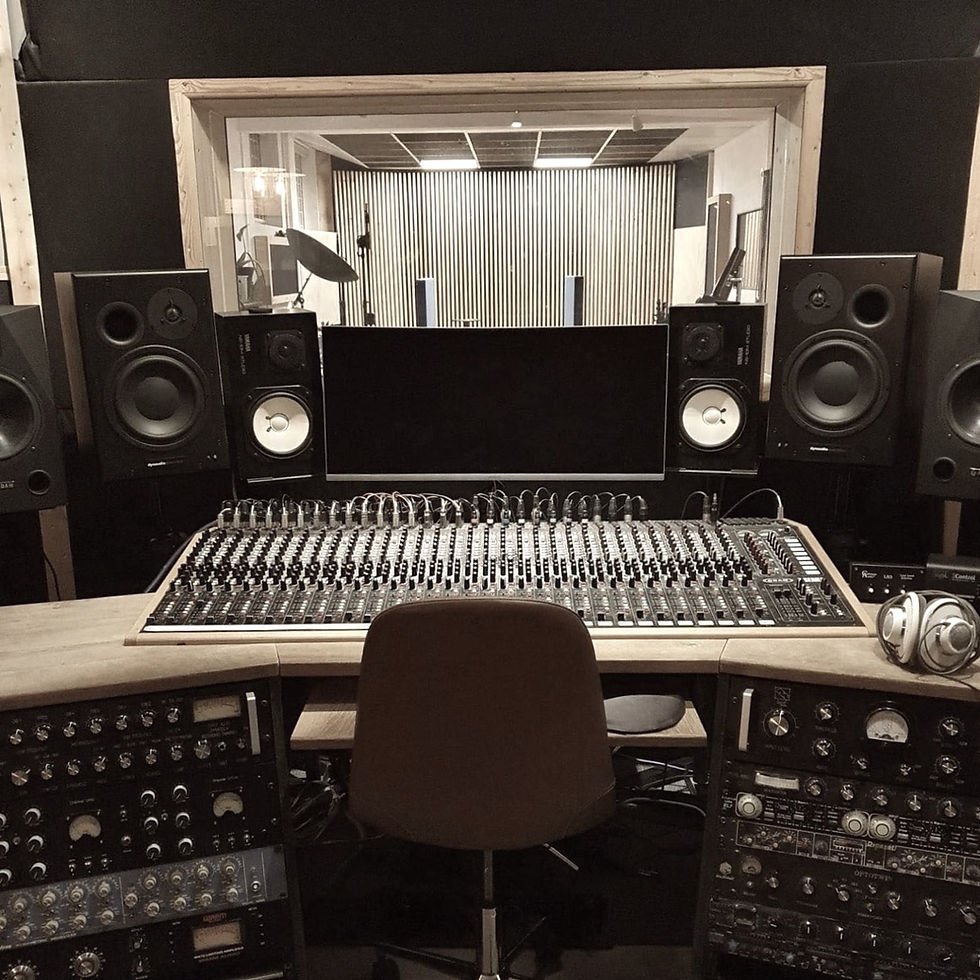
What Happens After You Send Us a Rough Mix

Sending your record to a studio you have never met is a leap. You are handing over songs you have lived with for months, often to people in another country, and most studio websites tell you very little about what happens next. So here it is, plainly.
We are Tapetown, a mixing and mastering studio in Aarhus, Denmark. We mix indie and alternative music for artists all over the world, most of them people we never meet in a room. This is the whole process, from the first message to the finished master.
1. You send a rough mix and a note
A rough mix, a demo or a private streaming link is enough. You do not need to prepare stems yet. Alongside it, tell us three things: what the song is, what you love about the rough mix, and anything that has been bothering you. If you have a release date, say so.
The note matters more than people think. "I love how the vocal sits in the demo, but the drums feel small" tells us more than a list of reference tracks.
2. Gustav listens and replies himself
Every message is read by Gustav Scheel, one of our mixing engineers, and he replies himself. There is no sales team and no automated funnel. He listens to the song before answering.
3. We tell you honestly if we are the right people
Sometimes we are not. If your record needs something we do not do well, or you want a sound we would fight against, we say so. That saves you money and saves us from mixing a record we cannot make better. When we are a good fit, we tell you why, in terms of the song.
4. You get a straight quote
We quote after hearing the music, not before, because a three-minute song with twelve tracks and a six-minute song with ninety are different jobs. You get one number and what it includes. For a sense of what mixing generally costs, we wrote an honest breakdown of professional mixing prices in 2026.
5. You send the multitracks
Once you say yes, you send the individual tracks: every channel as a separate WAV file, all starting from the same point, at the sample rate you recorded at. Turn off effects you are not sure about, and print the ones that are part of the sound. If a guitar pedal or a vocal effect is the sound, keep it. Label files so a stranger can read them.
6. We give you a delivery window
Once we have heard the actual tracks, we can tell you when the mix will be ready. We do not print a turnaround time on the website, because it depends on the record and on what is already on the desk.
7. We mix, and you listen
Two of us mix here, Rasmus Bredvig and Gustav Scheel, and we hear differently on purpose. Rasmus works on instinct, attitude and atmosphere. Gustav is technical, calm and correct. The first version you hear is a real attempt at the finished record, not a sketch.
8. Revisions until it is right
We work until both you and we are happy with it. Revision notes work best when they describe feelings and moments, not settings. "The chorus doesn't lift like it did in the demo" is a note we can act on. "Add 2 dB at 3 kHz on the vocal" usually is not the real problem.
9. Mastering, in house
We master in house, so the record can go from mix to master without starting over with someone new. We also master records mixed elsewhere. Either way the goal is the same: a master that is ready for release and still sounds like the mix you approved.
What we will not do
We will not promise a hit, a specific streaming number or a sound that belongs to another band. We will not flatten your song to match a loudness target. And we will not tell you a record is great when it is not ready yet. If you want to understand how we think about that, read how to choose a mixing engineer for alternative music.
Start with step one
Send a rough mix and a note. Start on our mixing page.
Frequently asked questions
How does online mixing work at Tapetown?
You send a rough mix and a short note. Gustav Scheel listens and replies himself, tells you honestly if Tapetown is the right fit, and gives a straight quote. Then you send multitracks, get a delivery window, and the record is mixed and revised until you and Tapetown are both happy with it.
Do I need to send stems before getting a quote?
No. A rough mix, demo or private link is enough for the first conversation. Stems come after you have agreed on the quote.
How many revisions does Tapetown include?
Tapetown works until both the artist and the studio are happy with the mix.
How long does mixing take?
Tapetown gives a delivery window once it has heard the actual tracks, because it depends on the record and the current workload.
Does Tapetown also master?
Yes. Tapetown masters in house and also masters records mixed elsewhere.