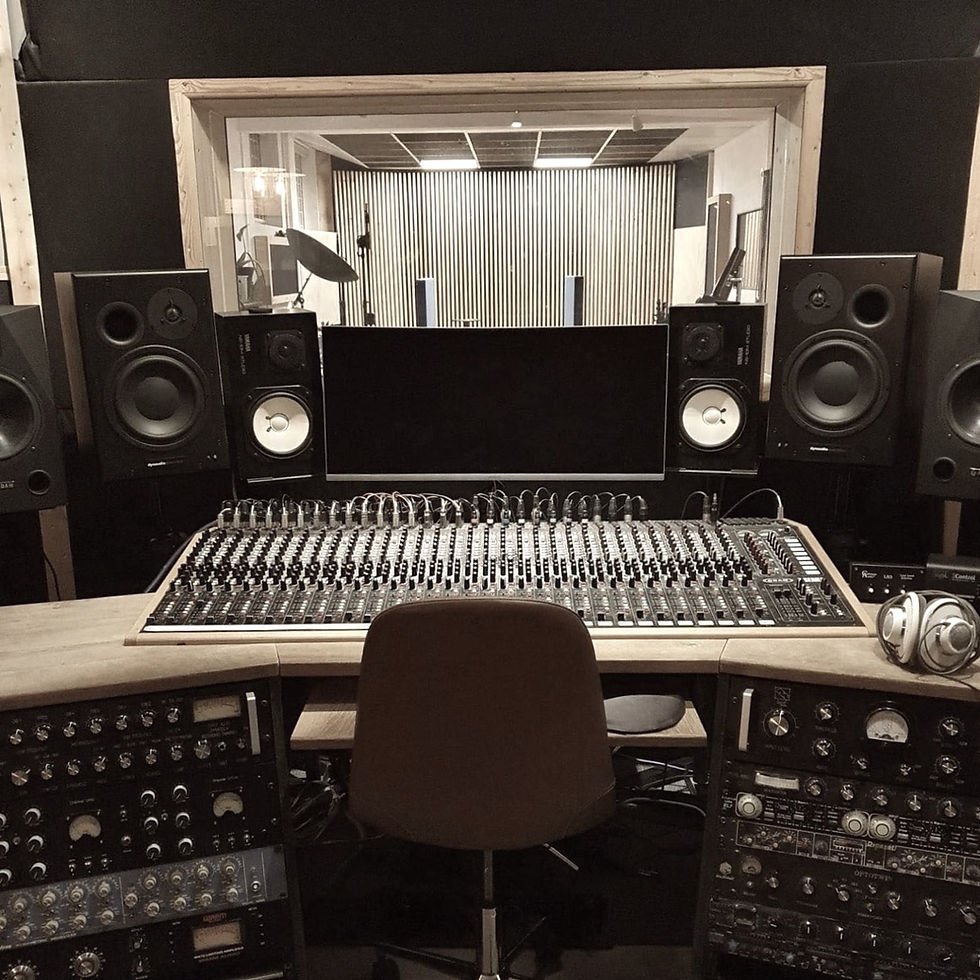
Room, Bleed, and Imperfection in Indie Rock Mixing
When a band tracks live in a room, the recording comes back with everything: the energy of the performance, the sound of the space, the bleed between instruments, and the small imperfections that make a take feel human. For indie rock, these elements are not problems to solve. They are the raw material of the sound. This article is for engineers and self-producing artists who are mixing live indie recordings and need to decide what to keep, what to reduce, and what to leave alone. The short answer: keep what carries energy and emotional truth, and only touch what actually gets in the way.

Why Live Takes Sound Different
A live take is a document of a moment. Four musicians in a room, playing together, reacting to each other. The tempo breathes. The guitar player leans into a phrase and the drummer follows. The vocalist sings with the physical effort of being in the room. This is the energy that first takes capture, and it is exactly what later takes lose. By the fourth take, the musicians are performing a memory of the moment instead of living in it.
For indie rock, that aliveness is the whole point. The genre was built on the sound of people playing in a room, not on grid-aligned perfection. When you strip out the room sound, gate the bleed, and align every transient, you are not cleaning up the recording. You are removing the evidence that the performance happened.
I have mixed plenty of records where the live room energy was the defining characteristic of the sound. The question is never whether the room is there. The question is whether the room helps the song feel like it is happening in front of you, or whether it smears the details you need to hear. That distinction is the difference between a mix that breathes and a mix that chokes.
Room Sound Is a Texture, Not a Mistake
Room sound is the natural reverberation of the space where the tracking happened. It is not a mistake. It is a texture. In indie rock, the room is often part of the aesthetic. The slap of a live room on a snare drum. The natural decay of a vocal in a wooden space. The way the room sound wraps around the instruments and makes them feel like they belong together.
The instinct to kill the room sound comes from pop mixing conventions, where every source is expected to be dry and close. But indie rock does not need pop conventions. As I wrote in my article on Indie Rock Mixing: Why Pop Templates Ruin It, applying pop mixing templates to alternative music strips out the personality. The room is part of the personality.
Wikipedia defines reverberation as the persistence of sound after the original source has stopped. In a mix, that persistence can do two things. It can glue the instruments together and create a sense of space and depth. Or it can build up and muddy the low end, blur the transient detail, and make the mix feel distant.
The decision point is frequency and time. Low-frequency reverberation builds up fast and creates mud. If the room sound is heavy in the 200 to 400 Hz range, it will cloud the low midrange and compete with the bass and kick. A high-pass filter on the room mics at around 100 to 150 Hz can clean that up without killing the character. The upper frequencies of the room sound, the air and the slap, are often worth keeping because they add dimension and a sense of space.
The other factor is decay time. A room with a long decay can smear transients and reduce punch. For indie rock, a moderate decay on room mics is usually fine. Longer than that and the mix starts to sound cavernous in a way that works for shoegaze but not for a tight indie rock track. If you want to push the atmospheric side, my article on Expert Shoegaze Mixing Techniques Revealed covers how to use room sound as a creative effect.
Bleed Between Instruments: Friend or Foe?
Bleed happens when a microphone picks up sound from a source it was not intended for. The snare drum in the vocal mic. The guitar amp bleeding into the overheads. The bass rumbling through the whole room. In a pop mix, bleed is a problem. In an indie rock mix, bleed is part of the glue.
The reason bleed helps is simple. When instruments share acoustic space, they sound like they were recorded together. A mix with zero bleed can sound sterile, because every source is isolated in its own clean channel. The bleed creates crosstalk, the same way the instruments in a live performance interact acoustically. That crosstalk is part of what makes a live recording feel cohesive.
But bleed can go too far. The threshold is when the bleed masks something you need to hear clearly. If the vocal is full of snare drum, the vocal becomes less intelligible. If the overheads are mostly guitar amp and the cymbals are buried, the high end loses definition.
The fix is not gating. Gating the bleed out of every track destroys the natural interaction and leaves the mix sounding chopped up. Instead, work with the bleed. Use the mic placement and the performance to manage it. If the vocal has too much snare, the singer can move back from the mic or the drummer can play quieter on the verses. If the overheads are full of guitar, the amp can be moved or angled.
In the mix, the bleed can be reduced with careful EQ rather than gates. A narrow cut in the vocal mic at the snare's fundamental frequency, around 200 to 250 Hz, can reduce the bleed without making the vocal sound thin. The same approach works for guitar bleed in the overheads. The goal is not to eliminate the bleed. The goal is to reduce the masking so the intended source comes through clearly while the bleed still contributes to the glue.
Imperfection as Identity
Vocal cracks, timing drift, odd tones, the sound of a chair creaking, the breath before a line. These are the imperfections that carry information. They tell the listener that a person made this recording. For indie rock, that information is valuable.
The question is not whether to remove imperfections automatically. The question is whether the imperfection increases emotional believability or distracts from it. A vocal crack on an emotional line can make the performance more powerful. A timing drift in the rhythm section can make the groove feel human. A chair creak in a quiet section can break the spell if it is loud enough to pull attention.
I have kept plenty of imperfections in mixes because the alternative was a sterile version of the performance that did not feel like anyone meant it. The automatic correction tools in modern DAWs skip the question of whether the imperfection is useful. They assume all imperfections are problems. They are not.
The practical approach is to listen to the take once, all the way through, before reaching for any correction. Note the imperfections that bother you. Then ask: does this imperfection make the performance feel more real or less real? If it feels real, leave it. If it feels like a mistake that breaks the listening experience, fix it. That decision is the difference between preserving aliveness and polishing it away.
How to Mix Around What You Keep
Once you decide to keep the room, the bleed, and the imperfections, the mix changes. You are not trying to make every source sound isolated and clean. You are trying to make the whole recording sound like a band in a room, with clarity where it matters.
Start with the balance. The room sound and bleed will take up space in the mix. If the room is prominent, the direct signals need to be clear enough to cut through. A close-miked kick and snare with good transient detail can anchor the mix even when the room mics are wide open. The same for the vocal: a close mic with presence in the 2 to 5 kHz range can stay intelligible above the bleed.
EQ in this context is about separation, not correction. The close mics and the room mics share the same source but at different distances. They also share the same frequency content. Using equalization) to carve space between them helps. A high-pass on the room mics, a cut in the low mids where the bleed builds up, a small boost in the close mics where the source needs to cut through. These are gentle moves, not surgical.
Compression on the room mics is a different tool than compression on the close mics. A room mic with fast attack and medium release can bring up the ambient detail and make the room feel bigger. But too much compression on the room can exaggerate the bleed and make the mix feel chaotic. A dynamic range compression ratio of 2:1 or 3:1 on the room mics is usually enough to control the peaks without pumping the bleed.
Automation is the final tool. The room level and the bleed level can change throughout the song. In a verse where the vocal needs to be intimate, the room mics can come down. In a chorus where the band needs to hit hard, the room mics can come up. The same for the vocal: if a line has an imperfection that works, leave it. If the next line has a crack that breaks the feel, automate a fix or comp a different take.
FAQ
How much room sound is too much in an indie rock mix?
Room sound becomes too much when it smears the transients of the kick and snare to the point where the rhythm loses its punch, or when it builds up in the low mids and makes the mix sound boxy. If you can hear the room clearly but the drums still hit, the room is probably at a good level.
Should I gate the bleed out of my drum tracks?
No, not in most indie rock mixes. Gating bleed destroys the natural interaction between the instruments. Instead, use EQ to reduce the masking effect of the bleed on the intended source. A narrow cut at the snare frequency in the vocal mic is more effective than a gate and preserves the glue.
When should I keep a vocal take with imperfections?
Keep a vocal take with imperfections when the imperfection increases emotional believability. A crack, a breath, a slight pitch drift at the end of a phrase can make the performance feel human. Only fix it if the imperfection distracts from the listening experience or breaks the emotional arc of the song.
How do I balance bleed and clarity in a dense mix?
Balance bleed and clarity by using the close mics to anchor the clarity and the room mics to provide the glue. The close mics need enough presence to cut through the bleed. The room mics can be high-passed and gently compressed to control the level. Automation across the song helps the room sit differently in verses and choruses.
Can room sound help a mix feel more live?
Yes, room sound is one of the main elements that makes a recording feel live. The natural reverberation and the crosstalk between instruments create the acoustic signature of a band playing together. Keeping the room sound at a level that supports the performance without smearing the detail is the key.
If you are mixing a live indie recording and want to keep the aliveness without losing clarity, get your mix release-ready with Tapetown. I work with independent and alternative music from indie and post-punk to shoegaze and noise, and I know the difference between cleaning up a mix and stripping out its personality. Send me your stems and I will give you a mix that sounds like a band in a room, not a grid.
More on mixing indie rock
This guide is part of how we mix indie and alternative records at Tapetown. Send us the rough mix through our online mixing service, or read more about indie rock mixing. We also work with post-punk and shoegaze bands.