


Live Recording: Why Performance Problems Become Mix Problems Later
Live recording makes the mix more honest.
That is part of the appeal. Musicians hear each other. The take has pressure. The drummer reacts to the bass. The vocal sits inside a moment instead of on top of a grid. The room answers back. The recording has a chance to feel like people playing music at the same time.
It also means the problems are recorded together.
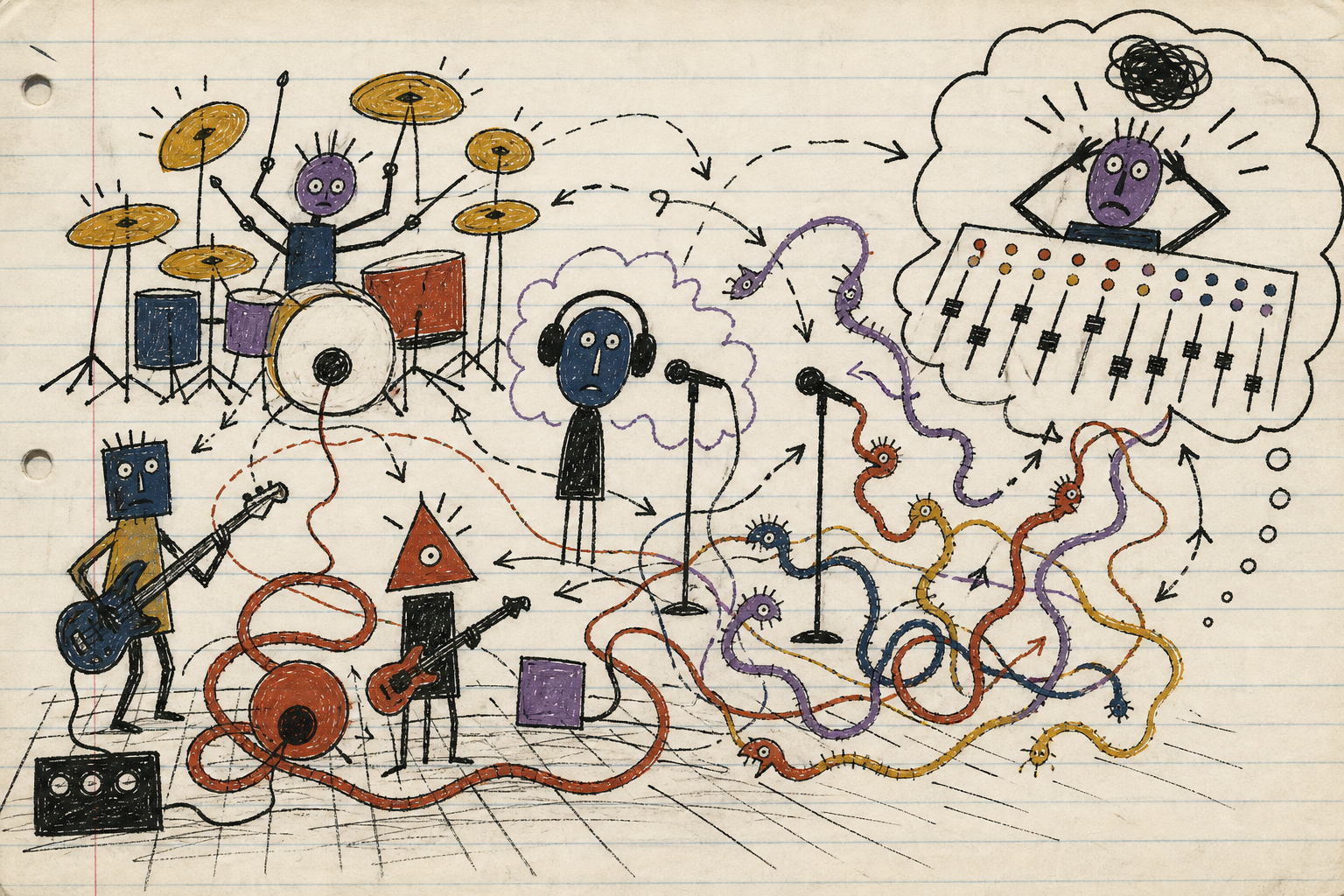
A live session can create mix problems that no plugin fully separates later: cymbal-heavy rooms, guitars bleeding into drum mics, bass and kick fighting in the room, vocal mics full of spill, headphone balances that change the performance, and phase relationships that were decided by where people stood.
The mix does not receive isolated sounds. It receives an event.
Bleed is arrangement
Bleed is usually discussed as a technical problem. It can be. A vocal mic full of cymbals can make the vocal hard to compress. Guitar bleed in drum mics can make edits difficult. Bass spill can cloud the kit. A loud amp can make the room mics less useful.
Bleed is also arrangement.
If the band plays with a natural balance, bleed can glue the recording together. The guitar in the drum room may make the kit feel like it shared air with the band. The vocal spill may give the take a sense of risk. The bass amp in the room may make the drums feel less isolated. The microphones start agreeing about the event.
Tapetown's article on recording a band live in a room is relevant because live recording is a relationship between musicians, room, microphones, and decisions. Bleed carries that relationship into the mix.
Bad bleed sounds like an argument. Good bleed sounds like evidence.
Cymbals decide more than people admit
Cymbals often become the hidden ruler of a live recording.
If the drummer plays cymbals too hard, every microphone hears it. The overheads become obvious, the room mics become metal wash, the vocal mic gets harsh, the guitar mics lose space, and the mix engineer spends the rest of the process trying to control a performance balance that was printed into everything.
This is about how loud things are in the room.
A drummer with great shell tone and poor cymbal balance can make a live recording feel smaller than it should. The snare may hit hard in the close mic, but the room collapses into high-frequency smear. Compress the room and the cymbals get louder. Add vocal top end and the cymbal spill gets sharper. Push guitars and the upper mids crowd the lyric.
Live recording rewards drummers who can make the kit sound like one instrument in the room.
The mix can shape cymbals. It cannot fully unplay them.
Headphone mixes change the take
The headphone mix is part of the recording.
If the singer cannot hear the pitch center, the vocal may tighten up or push sharp. If the drummer hears too much click and not enough bass, the groove may become stiff. If the guitarist hears the amp too quietly, they may overplay. If the band hears a polished monitor mix that hides the room, they may perform into a fantasy version of the track.
Those choices show up later as mix problems.
A vocal that was sung defensively may need more compression and still feel tense. A rhythm section that never locked in the headphones may require editing that reduces the live feel. A guitarist who fought the monitor balance may fill too many gaps. The mix inherits the musicians' monitoring decisions as performance facts.
Live recording needs practical headphone work alongside good microphones. The musicians need enough of the right information to play the song, not a perfect studio fantasy.
Phase is performance geometry
In live recording, phase starts as performance geometry.
Every microphone hears more than one source. The snare arrives in the snare mic, overheads, rooms, guitar mics, vocal mic, and maybe the bass mic. The guitar cabinet arrives in its own mic, the drum overheads, the room, and the vocal mic. Each arrival has a different timing and tone.
Shure's guide to recognizing and preventing phase issues is useful for the technical side. In a live room, the practical version is brutal: placement becomes the sound.
Move the amp. Move the drummer. Change the mic angle. Put the vocal mic somewhere less hostile. Choose a quieter cymbal. Use a gobos carefully. Every physical move changes what the mix will later consider possible.
Tempo problems become tone problems
Timing problems in live recording rarely stay in the timing lane.
If the drummer rushes the fills, the cymbals may splash into vocal lines. If the bass drags behind the kick, the low end can feel wide and soft even when the tones are fine. If the guitar pushes the chorus too early, the vocal may sound tense. If the band speeds up when the arrangement gets dense, the mix may feel exciting and unstable in the wrong way.
The mixer can edit. Editing live recordings can work beautifully. It can also expose bleed and phase problems very quickly. Move the drums and the guitar spill moves differently. Tighten the bass and the amp bleed in the room stays behind. Edit the vocal and the cymbal spill jumps.
Live timing has to be good enough that the mix is shaping a performance rather than performing surgery on one.
When the tempo breathes musically, the mix has motion. When it lurches, every balance decision gets harder.
Amp volume is a mix decision
Guitar and bass amp volume in the room decide a lot before the mix starts.
A loud guitar amp can make the band feel powerful. It can also dominate the drum mics, destroy vocal separation, and turn the room into guitar soup. A quiet amp can give the mix more control but may make the guitarist play without the same confidence. A bass amp can give the room body, or it can smear the kick everywhere.
The question is how the amp volume changes the performance and the bleed.
Sometimes the right move is a smaller amp turned up. Sometimes it is more amp in the headphones and less in the room. Sometimes it is a DI plus a controlled amp. Sometimes the live feel needs the amp pushing air, and the mix has to accept the consequences.
There is no free version. The room hears the decision.
The vocal mic hears the band
The vocal mic is often the most unforgiving microphone in a live recording.
It needs the singer, but it also hears drums, cymbals, guitars, room, headphone spill, and every decision about where the singer stood. Later, when the mix needs the vocal brighter, louder, more compressed, or more intimate, all that spill comes along.
A singer with good mic technique can save a live recording. Staying close enough, controlling loud lines, turning away at the right moments, and keeping a consistent relationship with the mic all make the mix easier.
The opposite is hard. A singer who backs away on quiet lines and shouts off-axis in choruses can leave the mix chasing the vocal while dragging the whole room up and down.
The vocal is not isolated just because it has its own channel.
The room sound should be rehearsed too
Bands rehearse songs, but they rarely rehearse the way the room will hear them.
A part that works in a rehearsal space may crowd the live recording. A cymbal pattern that feels exciting in the room may cover the vocal mic. A bass tone that feels huge near the amp may blur the kick ten feet away. A guitar line that sits perfectly on stage may scratch through the drum overheads once microphones are involved.
Before recording, the band needs to hear a little of what the microphones hear. That does not require turning the session into a laboratory. It can be as simple as playing the loudest section, listening back, and noticing which instrument owns too much air.
That playback can change the performance faster than a long technical explanation. The drummer hears the cymbals swallowing the shells. The guitarist hears the amp living in the vocal mic. The singer hears the chorus tightening up when the band gets loud.
The room becomes part of the arrangement once everyone hears it.
Editing can remove the reason live recording was chosen
Live recording creates a specific kind of pressure. The band plays through sections together. Mistakes influence other mistakes. Good moments influence other good moments. The take has continuity.
Editing can improve that. It can remove a bad entrance, tighten a chorus, choose the best vocal line, or fix a bass note that distracts from the song.
Too much editing can remove the reason the band recorded live in the first place.
The drums become stiff. The guitars stop breathing with the snare. The vocal sits on top of the track. The room mics reveal jumps. The take starts to sound assembled, with all the inconvenience of live bleed and none of the momentum.
The useful edit protects the performance. The anxious edit tries to make a live recording behave like a programmed production.
Those are very different feelings in a mix.
Live recording needs decisions before the red light
The best live mixes usually come from sessions where the hard choices happened early.
Where does the drummer sit? How loud are the cymbals? How much guitar is allowed into the room? Does the vocal need isolation or pressure? Is the bass amp helping the kick or blurring it? Should the band play to a click, or will the song breathe better without one? Which sounds should be committed because the musicians react to them?
Those decisions do not make the session less alive. They make the live part easier to hear.
A mix engineer can do a lot with a live recording. Shape the bleed. Control the rooms. Repair phase. Build depth. Automate the vocal. Tighten the low end. Preserve the take's movement.
The best fixes usually follow the performance instead of fighting it. If the room swells in the chorus, use that. If the vocal spill makes one line feel dangerous, protect it. If the bass and kick blur in a way that feels like momentum, keep enough of that blur to let the band sound like itself.
The room still leaves fingerprints. A cymbal in the vocal mic. A guitar in the overheads. A bass note swelling in the room. A snare reflection arriving late. Those fingerprints can be beautiful when the band was balanced. They can become the whole fight when the room was ignored.
Live recording gives the mix a body. The body remembers how it stood.
