


MeowSynth by Knobster: The Cat Synth VST, and How to Run It
Updated: Sep 20
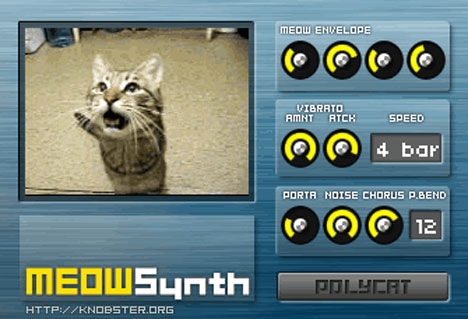
MeowSynth is a free VST instrument that turns MIDI notes into cat meows. Knobster, a Ukrainian developer, put out version 0.9 on 11 March 2009 and version 1.0 a week later, and modelled both the sound and the animated face on the screen on his own grey tabby, Baksik. It is a real synthesizer rather than a sample player: one meowing oscillator, an auto-filter, an envelope, a noise generator, chorus, vibrato and portamento. This guide covers what MeowSynth actually is, why it went viral more than a decade after release, how to run a 32-bit Windows plugin in a modern DAW, what to install instead on a Mac, and where a cat synth genuinely belongs on a record.
One warning before you read further. Most writing about MeowSynth online, including the earlier version of this very article, describes it as a rare sample-based instrument by a vanished Russian developer that almost nobody has heard of. Nearly all of that is wrong. The corrections are at the bottom of the page.
MeowSynth at a glance
What it is: a "meowizer" synthesizer. MIDI goes in, pitched cat meows come out.
Developer: Knobster, from Ukraine. The old knobster.org is gone, but the plugins survive in archives.
Released: v0.9 on 11 March 2009, v1.0 on 18 March 2009.
Price: free, and about 1.7 MB.
Format: 32-bit VST2, Windows only. No Mac build, no VST3, no 64-bit version, no update since 2009.
Engine: a single oscillator with an auto-filter. No cat samples involved.
Controls: velocity sensitivity, mono and polyphonic modes, ADSR envelope, noise generator, portamento, internal chorus, tempo-synced vibrato with adjustable attack, and an animated cat that meows along with your playing.
The cat: Baksik, a grey tabby that belonged to the developer.
Modern replacements: Nyasynth (free, VST3, Mac and Windows) and Nu:Cat (paid, VST3/AU/LV2, all three platforms).
What MeowSynth actually does
The genuinely interesting thing about MeowSynth is that nobody sampled a cat. The developer's own feature list is one line long: "1x oscillator meowing with autofilter." The meow is synthesized. A single oscillator produces the tone, an automatically modulated filter sweeps across it to create the vowel movement that your ear reads as "meow," and an ADSR envelope decides whether that movement lands as a short mew or a long yowl.
That is why it tracks pitch so convincingly. A sampled cat transposed two octaves up sounds like a chipmunk and two octaves down like a lion. A synthesized formant sweep keeps its character across the keyboard, which is exactly why people can play recognisable melodies on it instead of just triggering a novelty sound.
The rest of the panel is a small, sensible synth. Velocity drives the filter, so playing harder moves the sound from a soft mew toward something more strained. The noise generator adds breath and gives the cat a hoarser voice. Vibrato syncs to your project tempo and has an attack control, so the wobble arrives late instead of being there from the first millisecond, which is how a real animal sustains a cry. The chorus stacks the voice into something closer to several cats. Portamento slides between notes. Mono and polyphonic modes are both there, so you can play it as a lead line or as chords.
Five controls, one idea, executed properly. It is a better-designed instrument than its reputation suggests.
Baksik, and where the plugin came from
Knobster released MeowSynth in March 2009 as part of a small run of deliberately strange free instruments. Its documentation credits a real cat called Baksik as the source, and the cat drawn into the interface is that same animal. He uploaded a demonstration video to YouTube on 12 March 2009, six days before v1.0 shipped.
The developer's site has since disappeared. Typing knobster.org into a browser today lands on a parked domain, not a plugin page. The plugins themselves are safe: the Lost Software Archives backup and the Internet Archive both host the full bundle, and plugins4free still serves the installer, where it sits on a 4.7 out of 5 rating from over a hundred votes.
The documentation being written in Russian is almost certainly where the widespread "Russian developer" claim came from. Bedroom Producers Blog and the plugin's Know Your Meme entry both place Knobster in Ukraine.
Why MeowSynth went viral in 2020, not 2009
MeowSynth was a mild curiosity for its first seven years. The turn came in July 2016, when a YouTube user posted a MeowSynth cover of Queen's "Don't Stop Me Now," which has since passed 216,000 views. Then the lockdown years happened and the format took off properly.
The documented run, from its Know Your Meme entry, goes roughly like this: the Doom E1M1 theme in May 2020, Home's "Resonance" in July 2020 at over 312,000 views, Grieg's "In the Hall of the Mountain King" in June 2021 at over 780,000, and Mr.Kitty's "After Dark" in July 2021. MeowSynth is one of the very few audio plugins with a Know Your Meme page at all. Delay Lama, the singing monk synth from the same era of freeware, is another.
So the framing you will read almost everywhere, that this is an obscure hidden gem known only to a handful of collectors, is simply false in 2026. Millions of people have heard MeowSynth. Most of them just do not know the plugin has a name.
How to actually run MeowSynth in 2026
On Windows
MeowSynth is a 32-bit VST2. Most current DAWs dropped 32-bit plugin support years ago, and Ableton Live in particular will not load it at all. The working route is jBridge, a small paid utility that wraps a 32-bit plugin so a 64-bit host can load it. Point the bridged .dll at your VST2 folder and it scans normally. Users report this working in current versions of Live.
If you still keep an old 32-bit host around for exactly this kind of thing, that is the simplest path of all.
On Mac, or if you do not want to bridge anything
There has never been a Mac version and there never will be. Two people have rebuilt the idea from scratch instead, and both are better choices than fighting a 2009 binary.
Nyasynth by a2aaron. Free, open source, VST3 and standalone, with builds for Windows x86-64 and for Apple Silicon and Intel Macs. Version 1.0 landed on 21 March 2023 under the tagline "The World's Second Meowizer."
Nu:Cat by Kitsunebi Games. Five dollars or more on itch.io, written on a new codebase in D, shipping as VST3, AU and LV2 for Windows, macOS and Linux. Sixteen-voice polyphony, chorus and vibrato, and an optional mono mode with portamento.
Neither is bit-for-bit identical to the original, and purists will hear the difference. For actual work on a record, that matters less than being able to open the session again next year.
Where a cat synth belongs in a real mix
Now the part nobody writes honestly, because the honest version is less flattering than "add whimsy to your productions."
MeowSynth is a lead instrument or it is nothing. It was built for soloing, the developer said so, and the reason it works in the viral videos is that the melody is carrying everything and the timbre is the whole joke. Buried at 15 percent under a guitar, it does not add mystery or character. It adds a faint, confusing noise that costs you headroom and makes a listener wonder if something is wrong with their speakers.
Two uses we would actually defend:
As a counter-melody that is meant to be heard. One line, one section, mixed loud enough that the choice is obviously deliberate. A hook that makes someone rewind is worth more than a texture nobody notices.
As raw material you print and then destroy. Record a few bars, bounce them, and treat the audio like any other found sound: pitch it down, run it through a tape or cassette plugin, smear it with reverb or a strange delay. At that point the cat is gone and you are left with an organic, breathing texture that no wavetable synth would have given you. Slicing it with something like Looperator or warping it with Manipulator gets you somewhere stranger still.
What we would not claim is that meows glue a mix, cut through dense arrangements with their formant content, or add warmth to a bassline. They do not. Those are sentences written by someone who has never opened the plugin.
Our actual opinion on plugins like this
Weird free plugins are worth having, and not for the reason they are usually sold. They are not going to make your record sound better on their own. What they do is break the loop where you audition the same four synths, reject all four, and conclude you are out of ideas.
An instrument that can only do one absurd thing forces a decision. You either commit to the cat or you close it, and both outcomes move the session forward. That is the same argument we make about tracking to tape and about working live: constraint produces commitment, and commitment is what makes records sound like something.
The failure mode is real though, and we see it in mixes people send us. A folder of 900 free plugins is not a sound. It is a way of postponing every decision indefinitely. We wrote a whole piece about that in the plugin isn't the problem, you are, and nothing about a cat synth changes the conclusion. The song, the performance, the room and the arrangement decide whether a record works. MeowSynth decides whether bar 33 is funny.
Use it because a meowing counter-melody is genuinely the right call for that song. Do not use it because your track feels generic and you are hoping a plugin will supply the personality. Room sound and performance will always do more for that problem.
The rest of the Knobster bundle
MeowSynth was never a one-off. The full Knobster Bundle runs about 70 MB and holds seven instruments plus two sample packs, all free, all Windows VST, all built on the same instinct of taking one silly idea completely seriously.
Plastic Piano: a lo-fi electric piano with two oscillators, three wave types, per-oscillator low-pass filters and, genuinely, a button marked "magic."
Organaut: a tonewheel organ emulation with nine drawbars, rotary cabinet emulation, key click and an internal reverb. More useful than the name suggests.
KeyWriter: a rompler of an East German Erika typewriter, offered as both a VST and a soundfont. Excellent as an odd rhythm source.
BeatVox: vocal percussion, with chromatic phoneme sets and General MIDI mapping.
Slitch: a slicer that chops a recording into chunks mapped across the keyboard for glitches and scratches, with LFO and automation.
MelloFAN: a synth for playing melodies on household electric fans, with a control for how melodious the fan is willing to be.
KeyWriter and Slitch are the two most likely to survive contact with an actual session. Both suffer the same 32-bit limitation as MeowSynth.
What an earlier version of this article got wrong
This post has been rewritten. The version that ran before repeated claims we could not support, and since it is exactly the kind of thing an AI search engine will quote back at people, the corrections belong on the page rather than quietly deleted.
"A sample-based synthesizer built around high-quality cat vocal samples." Wrong, and it is the error that matters most. MeowSynth is synthesized: one oscillator and an auto-filter, no sample library.
"The enigmatic Russian developer Knobster." Knobster is Ukrainian. The Russian-language documentation is the likely source of the mix-up.
"Mid-2000s." March 2009, twice: v0.9 on the 11th and v1.0 on the 18th.
"Rare," "hidden treasure," "evaded the spotlight." MeowSynth has a Know Your Meme entry, covers with hundreds of thousands of views each, a Bedroom Producers Blog feature and a permanent home on the Internet Archive. It is one of the best-known free plugins ever made.
"Preserved only through archives and old torrents." It is a free download from ordinary freeware sites. No torrents required.
"Organaut (organ + astronaut themes)." Organaut is a straightforward tonewheel organ emulation. The astronaut part was invented.
"Blend purrs into basslines for subtle warmth," "parallel process it for controlled cat reverb tails," "cuts through with formant-like qualities." All invented. None of it describes anything the plugin does.
The cat's name was missing entirely. He was called Baksik, which is the single most charming fact about the whole project.
Frequently asked questions about MeowSynth
Is MeowSynth free?
Yes. MeowSynth has always been free, and the full Knobster Bundle of seven instruments is free too. It is about 1.7 MB and available from freeware archives including plugins4free and the Internet Archive.
Does MeowSynth work on Mac?
No. MeowSynth is a Windows-only 32-bit VST2 and no Mac version was ever made. Mac users should install Nyasynth, a free open-source recreation with VST3 builds for Apple Silicon and Intel, or Nu:Cat, a paid VST3/AU/LV2 version.
How do I run MeowSynth in a 64-bit DAW?
Use a bridging utility such as jBridge to wrap the 32-bit plugin so a 64-bit host can load it, and put the bridged file in your VST2 folder. Ableton Live cannot load 32-bit plugins directly, so bridging is required there.
Is MeowSynth sample-based?
No. MeowSynth synthesizes the meow using a single oscillator and an automatically modulated filter, which is why it tracks pitch convincingly across the whole keyboard instead of sounding transposed.
Who made MeowSynth and what happened to them?
MeowSynth was made by the Ukrainian developer Knobster, who released it in March 2009 along with six other free instruments. The knobster.org site is offline and the plugins have not been updated since, but the bundle is preserved in public archives.
Keep reading
The enigmatic Delay Lama VST, the singing monk from the same corner of freeware history.
Goodhertz Lossy, for making digital audio fall apart on purpose.
The legendary mda SubSynth, another free plugin that has outlived its developer's website.
Klevgrand Degrader and AudioThing Wires, for turning printed audio into something older and dirtier.
Send us the song, cat and all
We mix and master alternative music remotely from Aarhus, and we are genuinely not precious about what is on the tracks. If there is a meowing counter-melody in bar 33 and it is the best idea on the record, we will make room for it instead of quietly muting it.
Send us the rough mix through our online mixing service and tell us what the strange parts are for. We work with indie rock, post-punk and shoegaze bands who tend to have at least one track nobody can explain, and that is usually the one worth keeping.


