


Why Bands Should Record Without a Click Track
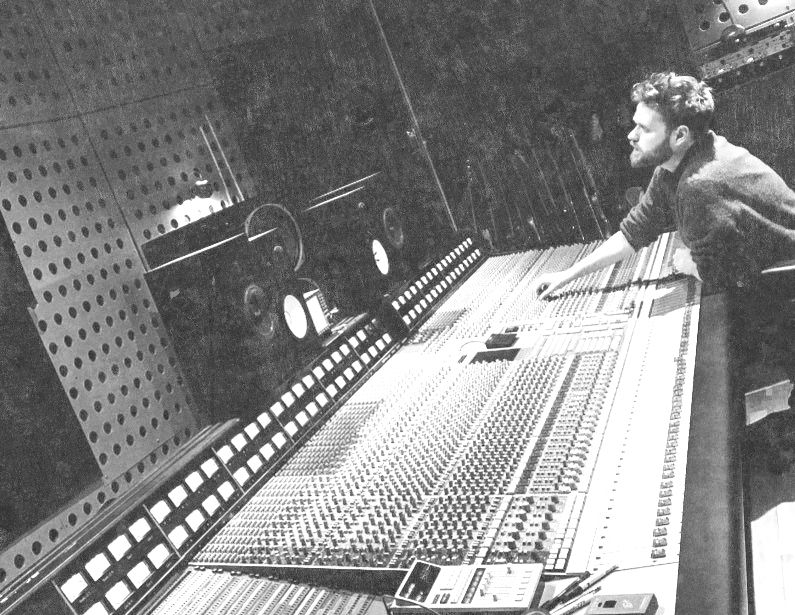
The click track is assumed. You book a studio session, the engineer opens the session file, and there it is: a tempo, a grid, a pulse that will run underneath everything the band plays and make it editable, fixable, replaceable. Nobody asks whether you want it. It is just there.
At Tapetown we almost never use one. This is not an accident of workflow or a stylistic quirk. It is a position we hold based on years of recording bands and listening to what happens when musicians play together without a machine telling them when to play.
The click track is solving a problem that most bands do not have. And in solving that non-problem, it creates a real one.
What the click track is actually for
The click track has a genuine use case. If you are building a record layer by layer, with different musicians recording at different times in different locations, a shared tempo reference is structural. Without it, the parts recorded on Tuesday will not sit properly against the parts recorded on Thursday. The click is the scaffolding that holds the construction together.
But most bands are not building a record that way. Most bands have played together for months or years. They have a shared rhythmic understanding that developed through hundreds of hours of playing the same songs in the same room. They already have a click track. It lives in the relationship between the drummer and the bassist, in the muscle memory of every musician in the band. It is more sophisticated than a metronome, more responsive, and more musical.
When you put a click track in their headphones and ask them to follow it instead of each other, you are replacing that sophisticated, living relationship with a machine pulse. You are asking musicians to stop listening to each other and start listening to a grid.
The recordings that result sound like what they are: musicians performing correctly rather than musicians performing together.
What gets lost
There is a quality in recordings made without a click that is easy to hear and surprisingly difficult to name. Producers and engineers reach for words like feel, groove, life, breath. None of them are quite precise enough.
What is actually happening is simpler to describe technically. When musicians play in response to each other, without external tempo reference, the micro-timing relationships between their parts are not fixed. A drummer who is genuinely listening to a bassist will push slightly as the song builds. A rhythm section that has played together for years will slow almost imperceptibly at the end of a phrase, in a way that creates resolution and rest. A pre-chorus will accelerate by fractions of a BPM because the musicians feel the song moving toward the chorus and their bodies respond to it.
None of these variations are mistakes. They are information. They tell the listener, at a level below conscious processing, that real people made this, that they were responding to something, that the music had weight and direction and consequence.
When you lock everything to a grid, this information disappears. The music is correct but it is not breathing. It is metronomically accurate and emotionally flat, and most listeners can hear the difference even if they cannot say what it is.
The editing argument does not hold
The main defence of the click track is practical rather than musical: recordings to grid are easier to edit. Individual elements can be moved, replaced, rearranged without timing problems. Takes can be combined. Sections can be swapped.
This argument makes sense if you intend to edit extensively. If you do not, it is meaningless.
At Tapetown we record fully live. No overdubs. The take is the take. We are not combining the chorus from take three with the verse from take seven. We are choosing the best complete take and presenting it. In that context, editability is irrelevant. The click track is offering something we have no use for and taking something real in exchange.
Even for recordings that are not fully live, the editing argument tends to be overstated. A recording without click can be edited. It requires more skill and more time, and the editing is less mechanical. But the idea that recordings must be to grid to be workable is an assumption that became an industry habit and then became a doctrine. It is not a technical necessity.
The question worth asking before every session is not whether you want to use a click track. It is whether you are going to be editing in a way that requires one. If the answer is no, the click should not be there by default.
The psychological effect on performance
There is something else the click track does that is rarely discussed, which is change how musicians relate to the session psychologically.
When a drummer is playing to a click, part of their attention is always on the machine. They are monitoring whether they are locking in, whether they are rushing or dragging, whether the click is sitting where it should be in the mix. This is attention that is not on the music, not on the other musicians, not on the performance.
Remove the click and that attention comes back to where it belongs. The drummer listens to the bassist. The bassist listens to the drummer. The rhythm section finds each other, which is what they have been doing in rehearsal for months. The recording captures that relationship rather than replacing it with a metronomic reference that the musicians are chasing.
The best takes we record at Tapetown are almost always the ones where the band is completely absorbed in playing together, where nothing in the headphone mix is pulling attention away from what is happening in the room. The absence of a click is part of creating those conditions.
When we do use one
We are not absolutists. There are situations where a click track is the right call, and we will use one when it is.
A band that genuinely struggles with tempo, where the songs speed up significantly under performance pressure or slow down in quiet sections in a way that is unintentional rather than musical, can benefit from a reference. The distinction is between musicians using a click as a tool to develop their internal pulse and musicians using it as a crutch that substitutes for one. The former is legitimate. The latter produces recordings where the musicians are serving the grid rather than the song.
There are also songs where the arrangement demands precise tempo, typically songs with sequenced or electronic elements where a human rhythm section needs to lock to a machine part. In those cases the click is structural in the same way it is structural for remote recording.
But these are exceptions. The default at Tapetown is no click. We will make the case for removing it in every session where we think the music will be better without it, which is most of them, and we will explain why rather than just asserting it. The bands that have trusted that position and played without the click have consistently recorded better takes than the ones they recorded with it.
What this means for how you prepare
Recording without a click track does not mean recording without preparation. It means the opposite.
If you are not going to use an external tempo reference, your internal tempo reference has to be solid. The songs need to be rehearsed to the point where the tempo is settled and consistent not because a machine is enforcing it but because the band knows the song deeply enough that it finds its own correct speed.
This level of preparation tends to produce better recordings regardless of whether a click is used, because a band that knows the material that thoroughly is free to perform it rather than execute it. The mechanical requirements of playing the song correctly are no longer taking up attention. What remains is the music.


