


THE NEEDLE DOESN'T HAVE EARS
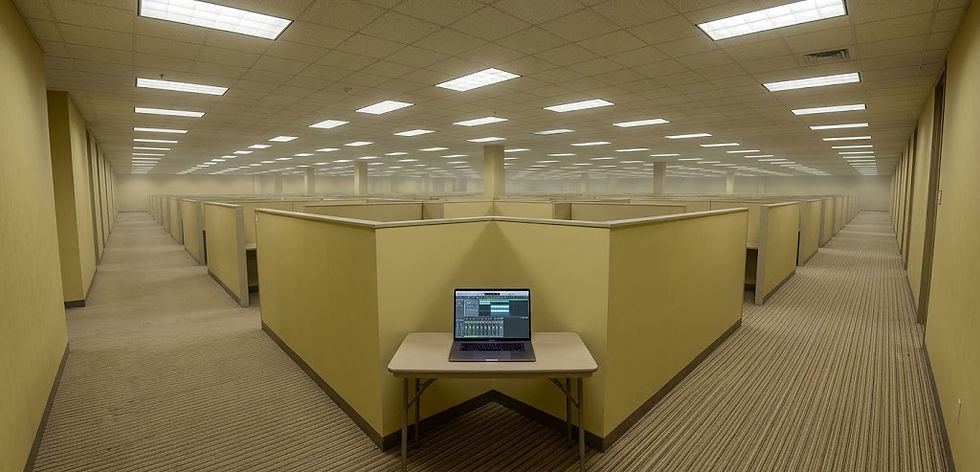
On phase meters, correlation worship, and the engineer who stopped trusting the most important piece of equipment in the room
The mix is working. Something real is happening in the low end, a relationship between the kick and the bass that has weight and movement and makes physical sense in a way that took two hours to find and will not be findable again if it gets touched. The vocal is sitting. The room is in the mix in the right proportion. Someone listening without an agenda would call it finished.
Then the engineer looks at the phase correlation meter.
The needle is not where the needle is supposed to be. It is left of center. Not hard left, not mono-collapsed, not the reading that indicates a genuine polarity problem requiring attention. Just left. Slightly. In the way that any mix with real low end and real width and real decisions in it will read slightly left of the perfect center that the meter's designer presumably considered optimal and that has nothing to do with how the mix sounds on speakers in a room.
The engineer reaches for the mix. Something is about to be removed from it that the mix did not ask to have removed.
What the meter is actually measuring and what it is not.
A phase correlation meter measures the relationship between the left and right channels of a stereo signal. A reading of plus one means the channels are identical, which is mono. A reading of zero means the channels are unrelated. A reading of minus one means the channels are perfectly out of phase, which will cancel completely when summed to mono and sounds alarming and usually indicates a wiring problem or a genuine error somewhere in the chain.
The range between zero and plus one is where stereo music lives. The needle moves around in that range based on what is in the mix, how wide it is, what the low end is doing, how the stereo information is distributed across frequencies. There is no correct position in that range. There is no position that means the mix is good and no position that means it is bad. The meter is describing the signal. It is not evaluating it.
The belief that the needle should be consistently right of center, that anything else indicates a problem requiring correction, is not a technical principle. Someone decided it, repeated it, other people heard it repeated and repeated it further, and now it lives in the folklore of mixing as received wisdom with the confidence of physical law and the evidential basis of a rumor.
Real recordings are not centered. They are alive. A mix with genuine width, with real low end, with decisions that serve the music rather than the meter, will read all over that scale depending on the moment. The needle moving left during a wide ambient passage is not a problem. The wide ambient passage is doing what it was supposed to do and the meter is correctly reporting that it is doing it.
The records that changed what recorded music could be checked badly.
Dark Side of the Moon. Nevermind. Kind of Blue. Pick any recording that reshaped the landscape and find an engineer today who would approve of its phase correlation reading at every moment. You will not find one, because those records were made by people who were listening to what the music needed rather than watching a needle that has no opinion about music and never has.
Alan Parsons was not checking a correlation meter between takes at Abbey Road and stopping to tighten up the stereo image when it wandered. He was listening. The listening produced something that people are still putting on headphones fifty years later to feel something specific in their chest that they cannot get anywhere else. The meter would have had opinions. Nobody asked it.
The engineers who developed genuine ears developed them by listening to results and adjusting based on what they heard, not by watching a meter and adjusting based on what it displayed. The meter is a diagnostic tool. It tells you something might be worth investigating. It does not tell you what the investigation will find or whether the finding matters or what the music needs. Only ears tell you that, and ears require time and attention and the willingness to be wrong in ways a meter cannot be wrong, and some engineers have decided that the meter is less frightening than the ears and have reorganized their workflow accordingly.
Mono compatibility is a real consideration. It is not a religion.
Yes, some listening happens in mono. Bluetooth speakers. Phone speakers. Certain club systems that sum to mono below a certain frequency. These are real contexts and a responsible engineer is aware of them and checks the mix in mono at some point in the process to make sure nothing catastrophic happens when the channels are summed.
Checking in mono is reasonable. Mixing for mono is surrender. Making every stereo decision timid because of the mono check is letting the worst-case listening scenario govern every decision, which is the equivalent of writing every sentence in a book for the least attentive possible reader and wondering why no one who reads carefully finds anything to hold onto.
A mix checked in mono, confirmed to not collapse into disaster, and then finished on stereo with full confidence in the stereo decisions is a mix made by someone with ears and judgment. A mix where every wide element has been narrowed, every interesting low end decision has been second-guessed, every phase relationship has been nudged toward the center of the meter because the engineer was afraid of the mono check is a mix made by someone who has outsourced their judgment to a scenario that represents a fraction of actual listening and deserves a fraction of the decision-making weight it has been given.
Turn the meter off. Finish the mix. Check it in mono once, fix anything that actually breaks, and send it.
The needle does not have ears. You do. Use them.


