


Session 12: Oscar O'Shea on the two-year plan as the new electronic press kit
A 26-year-old Aarhus manager, booker and venue-builder on using a two-year plan as leverage with bookers and funders, and why he'd rather work with artists who have a non-negotiable 'special sauce' than a bigger following.
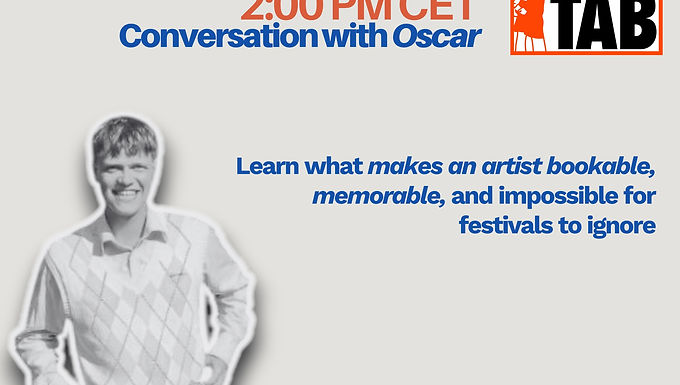
Oscar O'Shea started managing a band almost by accident during COVID (they went from a folk high school gig to Abbey Road two months later) and has since built Okay Management alongside a record label and a new venue in Aarhus with a stage and two courtyards. His signature tool is the two-year plan: a graphically laid out document with real singles, campaigns and target festivals mapped out, shared with bookers and funders as proof the act knows exactly how it gets from here to there, and updated with real progress every six months to keep it credible. He deliberately wears many hats (booking, hospitality, coaching, film) because sitting on every side of the table teaches him what each side actually needs. On picking artists to work with, he looks for a non-negotiable 'special sauce', something core to the sound or story that never gets compromised even as the rest of the presentation evolves, and warns against artists who start sounding like whatever their producer or trending region sounds like. His practical outreach tip: track your invite replies in a sheet, expect roughly a 5 percent reply rate, and use a genuinely great gig as a reason to follow up rather than the invite itself.
Full transcript
Session 12 - Conversation with Oscar
(Speakers corrected. Embedded interjections split out to the right speaker. Words kept verbatim. "Erin" normalized to "Eryn".)
Speakers:
- Eryn (host)
- Oscar (guest, Okay Management, Aarhus)
[Eryn]
I think we can go ahead and get started. Yeah, let's go. Yeah, so just to everyone who's listening in, thank you so much for joining us today on our, what is at the moment our final session for May. We have Oscar O'Shea joining us all the way from, are you in Aarhus right now?
[Oscar]
I'm in Aarhus in Denmark, yeah.
[Eryn]
Beautiful. So why don't you tell everyone a little bit about yourself and what you do, you know, in the industry, how you came to develop Okay Management, all of those things.
[Oscar]
Yeah, yeah, okay. I can do that. Yeah, I also, one of the reasons why I wanted to actually have my camera on is because I'm standing in a venue that I'm just now actually building and starting. So I wanted to, I've been moved to the kitchen today because there's an event in the actual, in the actual venue. So I'm standing in the kitchen of my venue to be, where actually there's a documentary film school that I have started, that are having their school. So I think sometimes it's hard for me to talk about what I do and where things come from. I think in a way, my journey has been quite emergent and I do a lot of things and I'm a part of a lot of communities. And that's really a way that I really like to work as well. So right now we are starting a venue like with a stage and two courtyards that can also host stages. And that is also where my artist management agency is going to live and have its community, which is also where we are building our record label from. So I work, yeah, now more and more place-based because we have this venue to gather in. But it all really started with just me meeting, actually re-meeting some of my old friends, because I booked them for a festival that I was organizing. And then they were like, oh, this is a cool festival. I said, yeah, thank you. And they were like, they had just been part of this talent development competition thing where they had gotten some advice that they should have an artist manager. And then they said, what if you could do that? And then I was like, no, I don't know. What is that? What is an artist manager? And it's just someone that helps out. Okay, I can help out. And then two months later, we were recording at Abbey Road Studios, which was just like something cool that emerged. And then that's six years ago. And now I'm 26 and I've been working as a freelancer independently in the creative industries, especially with a focus on helping developing careers for musicians, for artists, doing a lot of coaching and stuff. But I also do film. And during the summer, I tour a lot. And I am doing a lot of stage management this summer and a lot of artist hospitality. I'm doing Oskilde Festival, which is the largest festival in Denmark. And I'm doing also Northside Festival, which is the largest open-air festival in Aarhus. And then I'm touring with this band that I picked up six years ago. Now we're doing 17 shows. So, yeah, it's been a ride so far, but I'm still learning a lot. So that's because I'm wearing so many different hats and I'm learning a lot from being in these communities, which is like we help each other out. And now we're building a venue and we have a kitchen. A big kitchen. So maybe I can learn something about that.
[Eryn]
Yeah, for sure. I'm really curious to know how you got all of this started during Covid, it sounds like. During the pandemic. How did that, you know, go for you?
[Oscar]
So, like, for instance, the festival that we did, that was like in Denmark, we have this part of our school system that's called the Folkehøyskoler, which is like these kind of special boarding schools for grownups. And those were like, that was a very privileged place to be during Covid because it was, we had our own little bubble, like we were 350 people living out there. So we just started, like, organizing concerts and festivals for each other. And when things loosened up, we could invite more people out there and no one could play. So they were just so thrilled about getting an invite out. Like, we got so crazy deals for people coming playing because everyone wanted to play, even, like, at a discount. So we booked some crazy artists back then. And I guess, like, being in contact with those artists, I was 20 at that point and, like, talking with them and they were just like, that was all about, like, the joy of playing and coming out, seeing happy people and, like, learning what they, like, seeing my first, like, really big writer, like, what does a big artist want from playing in a place? And then, yeah, that, then, then I just, I get, I guess I got to learn a lot in a period where everything was closed down. And then I started at the Chaos Pilots, which is an international entrepreneurship school based here in Aarhus in 21. So I had that as, like, my learning arena. And then I had my music on the side. Yeah. Yeah.
[Eryn]
Yeah. Really cool. I'm also curious to know how you came to wear so many hats, too. Like, how did you sort of become, I guess, a bit of a jack of all trades in, in, in aspects of, you know, live music management and community building and all of those things? Was there anything in particular that you studied? Or was it all through experience? Or was it just, you know, not having the experience at some point and just seeing if you could do it?
[Oscar]
I guess I've been a part of some very creative, like, communities, been very lucky to meet a lot of good friends, like, through organizing things and creating events and festivals and doing albums. And it's always been with this kind of DIY spirit and very indie kind of way. We don't, like, there's a, like, the major labels really have a big grapple on, on, on, like, Danish music industry. And there was like, from the very start, we were like, we don't want to be part of that we, we want to be able to, to do our own things. And, and then, as, as many of you probably know, then when you when you do DIY, then you'll also have to, you have to save some money here and there by maybe doing things yourself. And then you just have to learn how to make a music video or how to make a cool press release with maybe not professional pictures or how to, I guess, yeah, how to get into the right arenas to learn new things. So I think, like, by, by really trying to stay indie and stay DIY, then you, then you, then, and if you have the idea that you're going to go far, and it's, if it's long term projects, then you just have to start learning things. And we're also like, now I sound like an old person. I'm not, I'm not that old. But, you know, we are in this digital age where like, now this is happening, like in a, in a session like this, like there's knowledge everywhere. And on the internet, YouTube, and there's so many people that you could ask and reach out to communities like Reddit, like, you know, like, if you want to learn something, then it's all about like, knowing how to organize your own time and how to organize your community and saying, okay, normally, Oskar is the one managing the stage. But this year around, it's really nice that he learns how to do like videography. So he's gonna go do that and take his time learning that. And then we find someone else that can go in and manage the stage and the tech and whatever. And then, and then you, like, you move those bricks around. And then people start learning things by shuffling it up sometimes as well.
[Eryn]
Yeah. Yeah. And I, and I think, you know, you're also the perfect representative for what we're trying to do with tab as well as, you know, by coming on and having a session with us, because this is also a very similar community that we're trying to foster, but online, you know, for, for people who might not have the physical community in the area of where they live, they can hopefully potentially find it through, you know, participating in our discord and participating in our community. So, yeah, that's a great note to be taken about, you know, the necessity of community around building DIY projects and making your way and I guess, a sort of like non corporate creative industry. And that's always very important to understand.
[Oscar]
I think for me, it's like that point about, like, giving people the chance to try things out. That's also like, you have to invite people into also getting some agency and, and like, give them the chance to, to grab onto some leadership. Instead of like trying to juggle all the balls yourself. I think that's like a key ingredients to building communities and building organizations is that people have to be able to, to also feel like they can contribute with something or that they are learning and that they're not stuck with a shit task and that they can shuffle around into new new spaces and to learn things.
[Eryn]
And I want to pivot to a couple questions that I saw in the in the chat before they, you know, disappear, among others, let's go. And there was a first question saying, what is your favorite thing to do out of everything that you've you've done so far, I guess.
[Oscar]
My favorite thing to do. And I think, like, I live in Denmark, right? And that's like a really that's a country, like, probably, I don't know where all of you are coming from. But, but particularly in Denmark, that there's something about the seasons, right? So there's something that we do in winter, and then there's something that we do in summer. And now, like, immediately when I get this question asked, I'm like, I really look forward to, like to, to hosting some festivals this summer. Like that's, that's something like these, these real bursts of energy, where there's a lot of people that have to come together to, to make something happen, and to to host the artists as well. And, and I guess also, like, then during the winter, I do all the booking and the Excel sheets and the fun funding and stuff. And that's not really what I like to do so much. But like seeing, seeing all of that come into fruition, then during the summer and seeing an artist that you that you booked, and then they come play at the festival, and everyone's happy. And that is hopefully also happy, because they haven't have a nice time being there in the space that you created. That's, that's something that I'm really looking forward to this summer, again. And, and then I guess during the winter, I love I love being in the studio with my artists, artists that I do management for. I love being part of the, like, that's one of the things I really love about project making is being part of a project from the very start to the very beginning. And, and I really love being part of those, those development phases and being in the studio, not sometimes I, yeah, I can hop on a piano or something. But mostly, I would just actually sit in the sofa over in the corner, listening to what they're doing, and, and maybe fixing some, some emails, or like, and then giving some feedback once in a while if they want it, but but like, just being part of that facing, okay, now we're starting something new is something cool up that, that in the end is going to be released, and it's going to have an impact or be part of something bigger. Yeah, that's like the winter joy, the playground. Yeah.
[Eryn]
And just so we can maybe throw them in the chat. What are the names of the bands that you're currently managing?
[Oscar]
Yeah, so I have a little promo, I have, I have a band that, like the band that I talked about, that's going to be playing a lot of festival this summer. They're called Downtown July, which has released their, their debut album. And, and like that. And, and then there's also Sauna Sima, which is much harder to spell. Can I have access to the chat? Maybe?
[Eryn]
Yeah, if you can you click on the button? Mm hmm.
[Oscar]
And there's Lips Glued as well. And we have also like this new project that we're working on Babylon, then there's Dark Stuffer. And we also have Ivalia. And, and, oh, yeah, then there's these guys that I would just hire hired a new trainee manager, and she's working with a band. They're called Tell Us. And helping her with that. And then I do like then then there's loads of more because I do like these short coaching sessions, mainly with artists based in Aarhus where we I give them some sounds very schooly, but then I give them some homework, like they have these different conversations that they have to have about like, themselves in two years, and how did they see themselves in the band and like these different interviews that they do with each other, when they've made like their two year strategy plan kind of thing. And then then they come visit me and we have a session together and, and then probably we see each other and in a month after that, and talking about what what they what did they get out of it says something stuck in a way.
[Eryn]
So I do that a little bit like a coach or consultancy kind of.
[Oscar]
And yeah, yeah, exactly. Yeah. And then we've like, we've created our own like formats for like the artists to fill out and to understand themselves better. And I really like working with bands because then we always work with how they can make their own little organization in a way, like they have to figure out what, what is it that each of them are good at? And what I what I each of them, like, like inspired by, they can make each of their own mood board, and then they get to have a conversation about, are they actually agreeing on how, how this, how things should look like, or feel like, or?
[Eryn]
Yeah, yeah, certainly.
[Oscar]
And then we have a conversation about that.
[Eryn]
Yeah, that reminds me a little bit of the last couple sessions we've had have all been with professional bookers for different venues and festivals. And they have taught they've stressed how important it is to have like a really sort of unique image or mission that you're trying to accomplish with your, with your group or with your music project in some ways, because that's what helps you stand out as well as like a stage presence. That's always really important for the purpose of, yeah, booking future gigs.
[Oscar]
And yeah, we work a lot with like the long, long term strategy, like that's, that's something that's really been a useful, like, Swiss army knife tool for us is to have this, like, really dense two year plan, where you also, where you, you also get to lie a little bit, or at least you get to dream a little bit in this two year plan. And then you also get to be a little bit specific and, and like having this two year plan is like, for me, the new electronic press kit, in a way, like that's what we are. That's what we're doing with what we've been doing with Downtown July, for instance, this summer is that we started booking these gigs that they're playing now two years ago. And then we told them that there's a debut album coming and they're going to be like part of the top of the iceberg at the end of that album run is that they're going to play it at their festival. So then we're a little bit cheeky and say, we're going to, it's a part of the two year plan that we're playing at your festival. We start that communication two years prior to that. And that that's like, then you make it nice, you know, you use some nice pictures and you set it up nice graphically. So it's easy to understand. And then you put in the live things, but you also put in like the campaigns that you're doing for each single, you put in like, this single has a focus on the radio. And then this single has like this run of videos that we're doing for, for TikTok or whatever. And then, then the bookers can like see, okay, this might actually make sense that they're going to be able to get to a stage where they could play at my festival in two years. And then if they're not like completely hooked from the start, then we throw in a little update half a year later and say, actually, the two first steps of the plan have already come through and we're quite positive that the rest of it, like the ball is rolling now. So, and it's something like this two-year plan, if you like really put some effort into it and you show that you have an overview of the industry, then you can also use it for funding. You could use it to get new project like partners that that could be, if you want to hire a booker to work for you, like show I already know what my plan is and you could just help me execute it. Actually, this is what we're going to do. And it's a nice plan. And, and actually I'm also using this plan to, to get some funding so we can actually make this record. And some of the festivals two years ahead already said that they're interested. And then suddenly it's actually a nice proposition for someone to start working together with you.
[Eryn]
Yeah. That's really cool that you, that you kind of help artists set themselves up for, for future success in that way. Cause that's something that I think that is very lacking in the, in the overall industry, especially across Europe. I don't, I don't know very many other people that, that do that specific kind of thing.
[Oscar]
But you can at least see that it's, it's quite useful. And I also see like electric wizard, you're asking what's your best advice for someone to try and book festival gigs for your band. And I would say like that is to sit down and try to understand like what kind of run are you looking into? Like what, what part of the plan are the festival gigs part of? And are you going to be playing like a smaller festival in that area a year beforehand? Like, are you going to be playing like in Copenhagen? There are loads of festivals. Maybe you should play one of those before you start contacting Oskille or at least tell them that there's a plan of you like warming up that area before you actually go to Oskille, which is huge. And for like Gorillaz and The Cure are playing there this summer. So maybe there's a way to go and like showing that you understand that is, can be like humble in a way, but also ambitious in the same way of saying we actually go in that direction and we know how to get there. Yeah.
[Eryn]
And then in reference to another question from Liz in the chat, are all of the bands that work with Danish or do you work internationally as well?
[Oscar]
And so I have a, I have a dream of, of signing someone with an international potential, if that would be in a Danish based artists that could like cross borders, that could be thing like a lot of these artists, they, they play in like they, they write in Danish, which is like the trend happening all over Europe, I guess that people are writing more and more in their native tongue. But I think there's going to be a shift in a few years. And I would like to be ready for that. Actually, I would like to start working with an artist soon. Now we're developing this venue now. And that's, that's the first priority is that we really need to land here and get the gears rolling, like the ball rolling on that. But then we want, we're looking at trying to start a new adventure up with someone that could really cross borders. And I think the reason why a lot of these artists are Danish also is that it's nice to, to actually get to meet over a cup of coffee.
[Eryn]
Yeah, of course.
[Oscar]
You know, like be able to sit down and go to the studio together and listen to things and be able to go on tour easily together, like going out, seeing the gigs that they're playing. And so I think a lot of these artists also based in Aarhus where, where I live. And so, so that like, that's a big thing for me is because like, we don't, we don't really get rich in this industry, but at least we can have some really nice experiences together and some nice relations. And, and I think that's, that's really important for me is that we can actually sit down and look each other in each other's eyes and say, okay, okay, let's, let's, let's fucking do this.
[Eryn]
Yeah, certainly. That actually helps me pivot a little bit into my next question. So every, every week before we have a session, we ask, we submit a form in the announcements for people to fill out questions that they might have for our guests for, for this coming week. And so the, I think the first question from that list follows up very nicely with what we've been talking about. And that's what makes you decide whether an artist is worth booking or investing time into, like what draws you to an artist that you see as a sort of like a development project or some kind of potential that you might see?
[Oscar]
I think, I think it's kind of a test in a way, like, like we're doing all of these coaching sessions and, and sometimes I'm intrigued about some of the artists I'm like, Ooh, should we, should we like huddle up and do something cool together? And then it's always kind of a test if they can understand this perspective of, of, of working long-term and understanding the value of like working DIY and, and indeed, I think it's important for me is that, like, it's not that I'm against signing an artist or booking for an artist that works for a major label. It's just that they have to understand what that means for their career and for the industry. And so, so like this, like I was sharing the same values. Do we understand that good things take time? Do we understand that we need to be able to like build up structures and an organization together that is make, make, make things easy for, for both of us in terms of communication or like, are we willing to put in the hours together and things? And what do I mean by indeed? Yeah, that's confusing. Like in Denmark, in Danish, like indie also means independent as well. Like, I know it's also a genre kind of thing, but, but yeah. And it's, it's important for me to, to, to still have strong independent artists for the industry on like a, on like a value kind of, kind of base thing that, that's, that's, I see what we are doing as like an important, like, what can you say? Contradiction to, to some of the mainstream things that are like all of the control that's happening of the industry from some of these major, major labels. And that doesn't mean that you, you can't be an original cool artists that are assigned to a major label. It's more like a political structural kind of level that I think it's important to, to keep, to keep the independence scene alive.
[Eryn]
Yeah. Yeah. It's almost a statement in a way too, because I feel like, you know, as we enter so many, so much of the mainstream being supported by, by these, these corporate entities, it's really important to kind of lean back into, yeah, the, the independent artists and the underground, because that's really where the community and the connection is. And it's not as, I think, manufactured in many ways. Yeah. It's definitely where the authenticity is, which is what I think is, is really important when it comes to making art and making music in general.
[Oscar]
Yeah. And I think there are huge opportunities for independent artists also, even if they don't stream that much or because those, those services are also controlled like the, the big playlist and all that is heavily controlled by major labels and major label distribution channels. Like that's what's happening in Denmark right now is that you, you really can't find a, a, like a distribution channel that has some kind of pundles of power in Denmark that is not co-owned or completely owned by a major label. So even if you have your own independent label, you have to go through a channel that's owned by a major label. Like we, we have, we have one kind of one, one or two left and those are also looking to get bought now. So I don't, then we have to completely neglect that Spotify or Tidal and stuff like that is important and start like really going back to Vinyls or, you know, Bandcamp and stuff like that. But that's also difficult because we, we, we need these platforms as, as the place where the consumer also is. So it's like, it's really hard to navigate it.
[Eryn]
Yeah. It's the same thing in the Netherlands, here too, where I think in Amsterdam, it's, it's the most oversaturated in a way where there are like very, very few independent organizations. And a lot of the music industry is run by two pretty large conglomerates that are kind of branches of Live Nation and FKP Scorpio. So they, they have partnerships with all of the larger and the popular venues and it's, it's really difficult to kind of make your way into, into people's ears when you're not coming from one of those companies. I want to touch on something else that you said too, with, you were talking about like noticing trends and things that you expect for the future of the music industry. And that leads me to another form question that we had, which is what trends are you currently noticing in the, in the live music and festival world?
[Oscar]
I think there's something about, yeah, it's hard for me to talk on like a European scale, but I guess.
[Eryn]
You can talk on a Danish scale. That's also perfectly fine.
[Oscar]
It's also kind of a micro, yeah, example in a way. I see something that's, that's, that's happening is that like the, the, the club culture is like sneaking really much in right now, like on the short term, I think like we're going to get a lot of festivals, for instance, that, that are looking to have exciting like electronic acts because they are building like small venues inside their festivals where like these small clubs, like that's something that's happening in Denmark, which is, which is kind of cool. So, so there are lots of more venues for these electronic acts that are then like incubators for playing the big stages, because a lot of festivals are ending their lineup with, with large electronic acts instead of, you know, hand-played music. But, but like in Denmark, we also see like a, a current contradicting trend, which is like, we, then we have the one or two duo setups with electronic music. A lot of those things are popping off, but then we have these huge bands, like, I mean, like 15 people, 20 people taking the stage together and making like these total, total, like nearly like a circus theater kind of performances, which is, which is really popping. And I don't, I don't know what it is about that. I think it's maybe, somehow it's also just a proof of concept. Can you get so many people on stage to perform your thing, then, then it might be kind of cool. So I think it's easy for people to lean into, like, here's actually a community, here's something to sing along to. And yeah, I see, I see. And I also think it's about more humans on stage than is real.
[Eryn]
Yeah.
[Oscar]
I think, I think we're also, sorry, go ahead.
[Eryn]
I was just gonna say, I think we're also at an era where a lot of artists are just trying to make things that have never been seen before, never been experienced before, because, you know, the, the popular music industry has, has been around for a good number of decades at this point. And it's, it's, I feel like sometimes it's easy to, to think that there are no more ideas left or anything like that, because there has been so much that has been done, but I've been seeing a big trend as well in just artists being really experimental and inventive, and it's really exciting to watch.
[Oscar]
Yeah, yeah. And it's also about, I also see like stages popping up places where they haven't been before. Like, yeah, that's also been a part of the strategy for me with some of my bands, because I have this DIY experience where we can make a stage out of nearly anything in a few hours, because, and then we know someone has something in the garage or some speakers or we can throw it up and then let's fucking go. And I think like doing, also because we, we really know the importance of documenting things and we can actually quite quickly make something that can have an impact for our careers. If we do something weird or spectacular or something that hasn't been done in a setting where it hasn't been done before, and if we film it then and take some pictures and like, then there's a story and then like, what the fuck, did you just throw a big concert inside a bowling venue or on a pirate ship or inside a wrestling ring at a big street party? Or yeah, that's just some of the shows that we've been doing like in the past few years. It's like these weird kind of arenas where punk music, for instance, doesn't normally live. So okay, we take this weird mix and then something cool comes out of it.
[Eryn]
I'm really curious to know where, how you get these organizations or the municipality to say yes to these kinds of things.
[Oscar]
That's also like, that's the toughest thing, actually. That's the municipality, like we really, I have now a spot festival, which is the largest showcase festival in Denmark. For the third year now, we've been doing concerts inside the local bowling venue, and where we just build a stage out on the bowling lanes. And we get in our PA, like our speakers and our mixer and like we've got the stage in there. And then we host four concerts. And for the past two years, it's been smooth, you know, then I called the fire department, hey, we're doing this, we are keeping that, you know, we're keeping the cap and we're making sure that we know where our fire extinguishers are and all of that. And then this year around, they stopped me and they stopped me in February, I called them and we're doing it again. They're like, no, no, you can't do that. I was like, what are you talking about? I've been able to do this the past two years. And then no, you can't do that this year around, you're only allowed to be 105 in there. It's not allowed to actually do concerts inside a bowling venue. And where did those rules come from? And then something in the law had changed, and I had to do a lot of more calls around to other departments. And I think you just have to be rigorous and also like, keep positive in a way like that. Keep the good tone also and keep being really good at providing the right materials and playing along with whatever they have to say or do.
[Eryn]
Would you say that not being afraid to be a little bit annoying is also important?
[Oscar]
I think, of course, if it's too slow, you have to call them and be like, why are you treating me this way? Just because I'm doing something that you don't understand, doesn't mean that it's not important. I remember talking to the head of the police department for our region, the boss, and he told us, if you want to stay in this business, you have to get your shit together. I was like, I am getting my shit together. You're just not reading my material. We are actually following the law on this and we're doing exactly what we should do. And he was like, no, you can't get these permissions. And I'm like, but you don't understand what it is that we're trying to do. You think it's not important that we want to host this concert with this concept. And he's like, no, I don't understand it. And it's like, but this is important. We're going to gather around a thousand people around this and it's important for some people. So can you please just try to make it happen? And instead of saying that it's not important that we are hosting this and you don't want to put the work into it. So I think it's also a matter of that sometimes when we are speaking to and working with different industries with music, which is also a cool thing that music can sneak into everything, sneak into every part of society, is that sometimes we have to remember that maybe other people or the municipality or whatever, like a car manufacturer, if you want to do a concert inside a big showcase of cars, I don't know, maybe they don't know that it's difficult to actually build a stage or that it could be fun or that they would actually get something out of it. They would get another audience into their thing. So yeah, not taking for granted that sometimes some of the things that we do is hard to understand. I think it's important when you work with new collaborators. Yeah.
[Eryn]
Yeah. I'll say, I will say I'm very inspired by your drive right now. It makes, I think there's one thing that's a very important pull quote that I think we can take from the session is just because you don't understand what I'm trying to do doesn't mean it's not important because I think that's a really good attitude to have when you're trying to put on events like you do. And it's a good note to take for other people who are interested in doing those kinds of things. I want to grab a question from the chat that I'm seeing right now from Bloom saying, what's a famous Danish band you wish you had discovered?
[Oscar]
Is that, is that like a famous Danish band that some of you might know or someone that's famous and famous in Denmark or what are we talking about here?
[Eryn]
Dealer's choice. Just any, any band, I guess, from, from Denmark that yeah, that's either famous in only Denmark or internationally famous that you just like, you get the itch from.
[Oscar]
I would say like, I don't like, it's also like discovered. So then I would have worked with them and then we would have run into the rainbows together and like play. Yeah. I don't know if like, I don't want to like regret the bands that I've chosen to work with in a way.
[Eryn]
No, I know. I know. I know.
[Oscar]
It's just like, I don't think I would have had the capacity to work with more bands, especially if they exploded. But during the time that I have been doing my thing. Yeah. What are we, what are we thinking? What are we thinking?
[Eryn]
Or just any band that you've seen at any band that you've seen at Spot Festival that you've been like, oh, I wish that I had started working with them.
[Oscar]
Like, I remember these a few years ago, there was a another actually my neighbors. I got the chance to, to, to kind of start working a little bit with a band that were called Sao Paulo. And I also I got offered them for booking a few times at some festivals that I was booking for. And, you know, I was just like, can you help out a little bit with this? It was not like they were standing there with a contract in hand and saying, okay, can you like do something for the for us? I knew that their manager. And I was like, I don't, I don't really have the time. I can't really. I don't want to spend the time understanding what's cool about these guys. So then I didn't book them and I didn't start working with them. And now we're neighbors and they are like, huge. And they've created some really, really cool albums. And I really like them. Like we, we stumbled upon each other a few times, because we have like our venue is right next to the rehearsal space. And they're so nice guys. I can just write their names Sao Paulo. And I guess I would also love to have worked together with Limor and Lowly. And there's a lot of, like a lot of these bands were rehearsing or recording in some studios close to where I've been doing a festival called Søderhavn Festival. And sometimes I feel like, oh, I should have just like, maybe I should just asked if I can be a tour manager or something, just come out and watch you play 20 times a summer, would be really cool, because I really, I love that music. And now we actually, we got the chance to for Downtown July's album, we got the chance to work with the producer of Limor, Lowly and Ganga. So the guy who created all these albums that I really liked, he came in and helped us and produced the new album there. So that's been really cool to work together with him.
[Eryn]
Yeah, I'm really curious to know then too, your reason for choosing these kinds of groups or what stands out about them? Because we have a question from the forum that also asks, what do promoters and managers notice immediately when discovering a new artist? Like what exactly about these artists would make you want to work with them?
[Oscar]
I'm really drawn to people that have this kind of air, like bands or artists that have this kind of air about them, that it's that they don't, that there are at least some parts of what they do that is not up for negotiation. Like it's, there's no compromises here. Like we are this, and don't fucking push it. And then there's this arena around us that we are playing around with, we are putting in new ingredients. Then it looks like this for this album, tastes a little bit like this for this album. But there are like some true things about us that we're not going to move on that. And we know what it is. There's like this confidence of knowing that there's something special about how our bass sound is like on, or there's something special about the way that we write our lyrics, like all of the text, like it's important for us that it has real poetry. So we're going to stick to that. And then we're going to make some, then we're going to play around with the music around it. And like I said, then this time around, we're going to do it a little bit more pop because then we can get more listeners. But there's still something intricate about the poetry of, I don't know if it makes sense what I'm saying, but like this authenticity in a way.
[Eryn]
Yeah. Yeah. A bit of like a uniqueness factor that only they could replicate in a way.
[Oscar]
Yeah. And like understanding what that is, I think is probably the first most important thing that you need to do if you're an artist, like understanding what is it like this special sauce, the magic sauce that you have that no one else can cook up. Like you have the secret ingredients for this special sauce and that's your family recipe. What is it that you have that that's really special? And then all of the rest of the things that are about promoting yourself and then that all of the tools and all of the ways that you can get the right amount of money to promote your work and all of that crap. That's something that you can learn and find help with. But like that special sauce, if you lose that, then yeah, that's the special thing.
[Eryn]
Yeah. And given your kind of like coaching and consultancy work that you've done too, I suppose you're also the right person to ask then how an artist might go about kind of finding that quote unquote special sauce, like you mentioned, if they're feeling stuck or they're really trying to, they really can't or having a hard time setting themselves apart from other artists to kind of make their way. What are some things that they can do to kind of discover that uniqueness factor?
[Oscar]
I guess it's like, that's like, that's a hard question.
[Eryn]
Yeah. If it's too like, if it's too individual, then like I completely understand that as well, but I just thought it might be a useful question to ask.
[Oscar]
I think the weird thing about this is that some people just have it and then they just need to like—
[Eryn]
Yeah, I agree with that too. Yeah.
[Oscar]
And then there's more like, then sometimes you need to invent it in a way and there's loads of techniques for that. Like then you, then you need to figure out if it's, if it's in your constellation or the way that your collaboration is and how you work together, probably as a band or in contention with a producer or something, or if it's specifically about where you're from, that's where there's something that, that you are inspired by, or it has an impact on how you sound. Like something that, that's devastating to me sometimes when, when some artists get signed by big labels is that then they start sounding like the producers that, that they normally work with, or they start sounding like something that's trending in another region where something else is popular and something is pulled down over the head of an artist because it works somewhere else. And then that's just replicated here in Aarhus in Denmark. No, no, actually there's some, there's some Aarhus sound that we need to stay, stay true to. Or, you know, does that make sense?
[Eryn]
Yeah. Yeah. Yeah. I feel like we can give as much advice as we can give, but then of course the, the creative side is, is very much up to the, up to the artist in, in most ways.
[Oscar]
I think it's also about sometimes like trying to understand what is it that we want to do something that needs to have an impact on people in a specific way. Then we need to stay in that lane. Like, do we have a, do, do we have some kind of set of values that we are trying to portray? Or do we have some kind of a political agenda or whatever? Like then, then we need to figure out what are the right ingredients to, to like, do that. Do we want to be the largest post-punk band in our region? Well, then maybe we have to figure out what, what are the really good post-punk ingredients that, that are out there. And then what is it that makes, makes us special? Could it be how we look? Could it be, could it be that we start each show by giving, I don't know, melted cheese sandwiches to the first 50 people in the crowd? I don't know, but then you fucking stand out. If you do like, what can you do that's, that's true to you and weird or spectacular still?
[Eryn]
Yeah, no, absolutely. I agree a hundred percent. And I want to jump into the last two form questions since we only have about 10 minutes left. And it's not a direct pivot, so I can't, I can't smoothly transition. So I'm just going to ask them. How can musicians promote themselves around important gigs without feeling pushy? And I think that this relates a little bit to like your two year plan, like you mentioned earlier with kind of like, like starting from the ground up in some ways, but I'm curious to know what your direct response to this question would be.
[Oscar]
So I have to get this question straight. Is it about getting an audience to a gig that you've already booked or is it about getting new gigs?
[Eryn]
New gigs, I think.
[Oscar]
Like getting new gigs. Yeah. So I would say like, if you have your press material, right, if you know how to write an email and if you know something about where you're going, let's say you've made your two year plan, then you need to identify like, what is the next, like, where could you, like who should you invite to this concert? And then maybe sometimes it's, it's not about, you know, making sure that they actually come to the gig, but then using the, the gig as like a reason to update them. So we are here right now. We've released our second single from the debut album. The first one went really well. The second one, not so much. But hey, we're doing a release concert for the third one. And actually, I think we have some momentum. Do you want to come to the show? And then maybe they don't answer. And then that's also, I think that's the thing, like you need to realize that if you, like there are, there are a hundred venues that you could reach out to, for instance, in Denmark, that maybe they don't answer on that one, on that gig that you're inviting them to. And maybe actually realizing that you're probably only going to get a 5% reply rate is, I think it's a good, it's actually a good realization because then, you know, okay, I should keep inviting people. I should, I, and, and, and then sometime around, they're going to be one of the part of the 5% that actually gets back. But you, you're like being organized about maybe having a sheet where you keep tabs on who got back to you on a, on, on that gig. And how many times did you send them an invite or how many, did you do a follow up after the concert? And then you have an overview of, of who you, who you invited and how many times you got in touch with them and if they got back to you. And, and if you also know that they're a part of the flow where they should be the ones playing in spring 27, then, then probably somewhere in that sheet, you, you see that now 2027 is not really, the spring of 2027 is not really coming together. If they're not getting back to you, but at least then you, then, then, you know, then you know where you're at and then maybe you should change your plan because like the ramp that you're building for 2027 in your two-year plan is not really working right now. So, so, so then you know where you're at and then you can go to the next concert and use that as a, as a promotion platform. And, and, and, and I would always say, like, if that concert feels important, if you're doing something cool with it and it looks great, or you're having new members playing in the band, film it, even just with an iPhone, get your grandma to film it with an iPhone or whatever, and then send that to the, to the booker that you are as a follow-up. Hey, you didn't show up. This was fucking dope. Please come again next time. And maybe they don't get back to you, but chances are that they've seen the mail and they just didn't have the time and you didn't fit into the schedule right now, but maybe you fit in somewhere else at some point. So I think it's about being rigorous about it, but keeping that overview, really.
[Eryn]
Yeah. You kind of answered my next question a little bit in, in your answer to the previous one. But yeah, let's say, for example, that an artist has played a gig and they've met, you know, either at a festival or a conference, and they've met an executive who wants to work with them, or they've met a new manager or a booker or someone to that degree. What do you think is the best way artists should follow up after meeting these people in, in person, like then to kind of turn that sort of, you know, one-on-one meeting into a business collaboration?
[Oscar]
Oh, stay top of mind, I guess. And it's also depending on what type of collaboration it is. I say, if you meet someone that you feel like this is clicking, you could be my next manager and you're at a festival, like you're at Eurosonic or you're at Spot Festival, you meet them on the Friday, get their phone number and then write them sometime next, next day, Saturday. Hey, my friend is playing this cool concert at this stage. Do you want to just, do you want to just watch it together? Like, do you want to just like hang out? Because then that's like, that's what, that's, that's that kind of connection that you're going to get with a manager. That's like, that's a personal connection. If it's with a booker, then maybe if you understand how this booker works, maybe that's relationship could be different. So maybe that's more about sitting down and saying, Hey, we met each other at the Showcase Festival. We had a good meeting and maybe we should work together. Actually, here are the results from, from who else I talked with on this festival. Like, here are the leads here. Here's the, like the quantitative data of what came out of this weekend. This is what we did. We talked with six venues and they were interested. Do you want to help close the deals? And then, then it's kind of prevalent that, that you're someone that that's nice to work with because you're, you're communicate, you're like, you're communicating and you're transparent about your stuff and you, you, you know what you're doing. And like, it's always about showing that you know what you're doing, I guess in these, that you're easy to work with. If, if you're looking to establish a collaboration with a label or a manager or a booker, because there are also just people and, and, and, and they, they also want to be able to do as much impactful stuff at one time as possible. And if you're easy to work with, then you're probably an attractive collaborator. Yeah, I mean, I ramble.
[Eryn]
No, it's great. It's all very valuable information. I don't know what you mean. That kind of leads me into my, my, my final question, and not that, that it needs to be a summation of everything that we've talked about. But if you could put into one sentence, or I guess your top three, what is the most valuable thing that you've learned from building festivals and showcase stages yourself? It like I said, if you can't, if you can't quantify it into one thing, you can do like a top two or three if you want.
[Oscar]
It's the most, yeah, I think for me, like that's been a part of my strategy from the start when I started working in this industry that I wanted like so many different sides of the table as possible. So that's why I'm both like doing representing artists on the booking and a management and a label side, but I'm also like creating stages for for others, because then I get to understand what demands you are able to like have on the other side of the table. If you're coming to a festival, I get to understand how people are communicating about their projects. Like a lot of the press releases that I'm writing now are probably inspired by some bands that reached out to me in a way that really resonated with me when I started booking the festival six or seven years ago. And like, I think, like getting your hands dirty in that way and understanding as many different parts of the industry has been like just really key to me in the role that I have, because I get to sympathize with so many different parts of the industry. And I also, you know, I also get to work with a lot of different people when I'm doing festivals, you know, and I get to try out new collaborations. Then like some of the technicians that we have, part of our touring bands, those are people that I hired for running one of my festival stages first, and then it did a really great job. And with him, maybe he should, I'm just going to keep him. And then they come back. And like, that's like when you do these big festivals and like these big events, then you get to like really try a lot of shit out and you get to work with a lot of different people. And that's like a very organic way of doing networking. And you're also inviting a network. And they also all come with a tour manager or a technician or a manager or a booker or, and then that's also networking, right? Then you can, like, I've also reached out to people for mentorship that were a booker of a band that I had booked for a festival that I was doing. Because then we started knowing each other because I booked their band, if that makes sense.
[Eryn]
Yeah, no, it makes perfect sense.
[Oscar]
There's so much value in all of these different kind of things, if we just know where to look for it. And if we stay humble, and if we stay curious, then like, then we can just like, what in everything that we do this opportunity, I guess, like, that's a very like, whoa, kind of positive, like hyper positive spin on things. But, but I really think it's true. Like if we have the time to reflect on, yeah, on what, what value different things have, then we can extract a lot of that, you know, we can give it to each other also.
[Eryn]
Yeah, yeah, it's a good summation with what Ina wrote in the chat, which is everything that we do is, you know, there's a place for opportunity, which I completely agree with. It's just, it's, it's more so about, you know, having the resources and the tools to, and the community to be able to, to do that with as well. I think with that, we're going to end our session. You can also, Oscar, you can also put all of your info and everything in the in the general chat if you'd like, but if anyone wants to follow your bands or your journey or your management or anything like that, is there any social media that you want to plug or any website or anything like that?
[Oscar]
Yeah, yeah, I can, I can put some things in. And yeah, thank you to you too, Eryn, that's Liz's writing. And yeah, I think it's been a nice conversation.
[Eryn]
Yeah. No, thank you again so much.
[Oscar]
Yeah, I'm very much an Instagram kind of guy. So like, I share all the work that I do there. I it's visual and I like working with video and stuff. So I'm going to put the, the, my personal Instagram and then maybe some of the other things in there as well. And yeah, maybe some of the live sessions that I've been doing with Rasmus as well, from the bowling thing. Yeah, I'm gonna, yeah, I'm gonna put some things in. We're posting a documentary film as well soon that I've been making with a project with Sita. We're doing that next week. Maybe I'll share that as well. It's a very cool project as well. It's called Nordic Incubator.
[Eryn]
Yeah, I'm looking...
[Oscar]
Live Incubator.
[Eryn]
Yeah, I was gonna say, if we had had time, I would have really dove into Nordic Incubator and Live Incubator, but maybe some other time. That will be a very useful conversation.
[Oscar]
We can talk about international collaborations and all of that, Jess, another time around.
[Eryn]
Yeah. Yeah, we'd love to have you back for sure. All right. I'm gonna go ahead and end here. Thank you, everyone else who tuned in to listen. We've had a really great turnout today. And yeah, keep an eye on the Tapetown socials and in the chat and everything for our next upcoming events. Yeah, thanks again.
[Oscar]
Thank you. Have a nice Sunday.
[Eryn]
You too. Bye. Ciao.